By: Carmela Kris Armilla, Program Officer, Synergeia Foundation
“Before I retire, I will contribute what I can to make our SGC functional and active,” declared Juan Rivera Jr. with resolve after attending the SGC Workshop. Mr. Rivera is the 61-year-old principal of Apo Elementary School in Argao. With four years left in his term, Principal Rivera is inspired to exhaust all means to improve the school he serves. He sees the SGC’s role in making this possible.
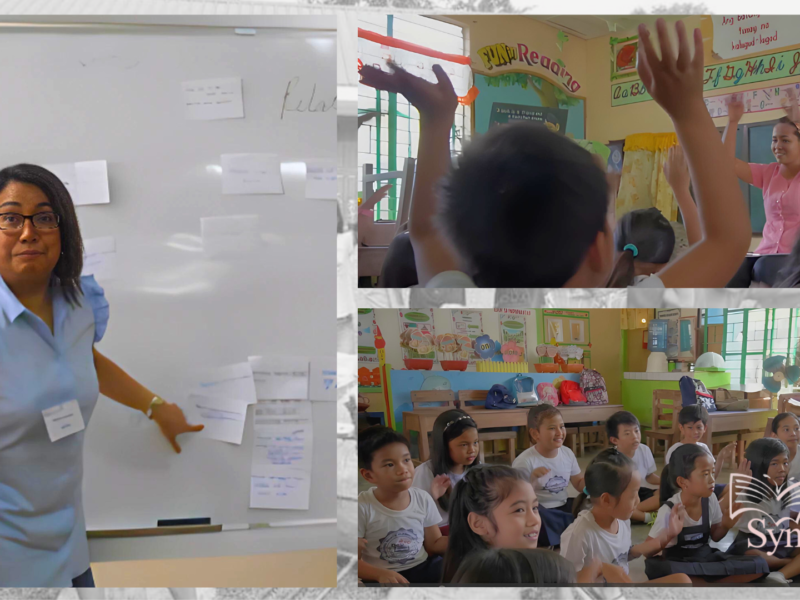
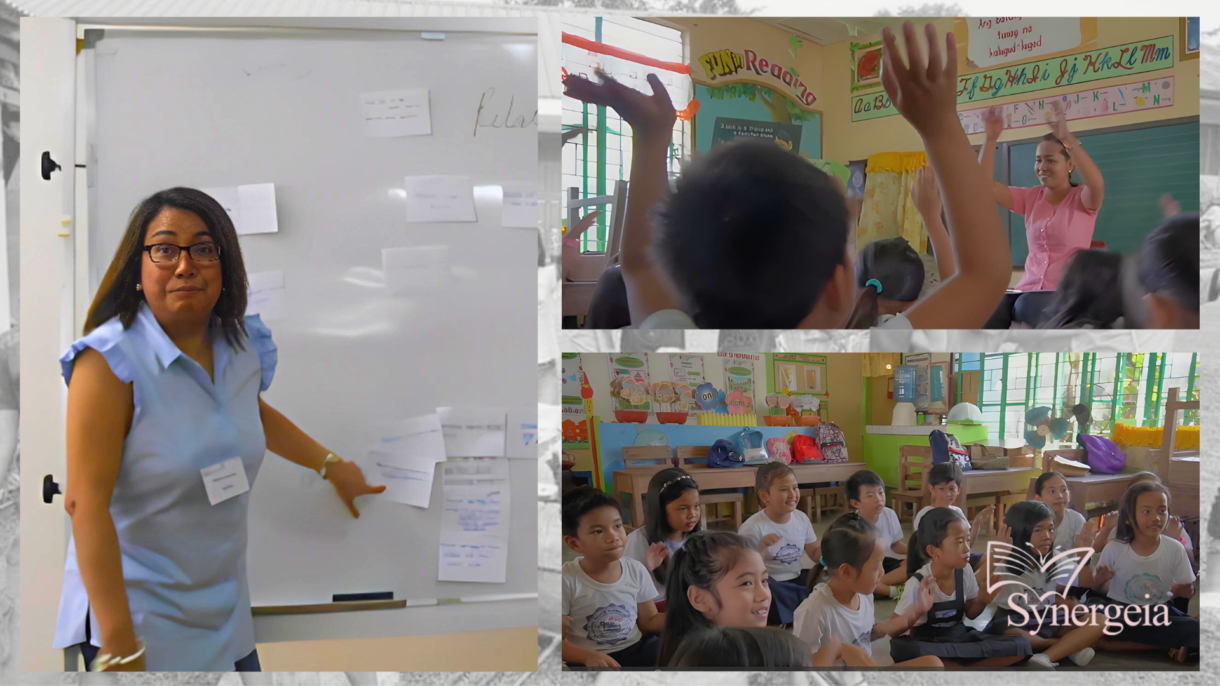
He was one of around 170 School Governing Council (SGC) members from Argao, San Fernando and Santander who attended the two-day workshop “We Can Work It Out: Making Our SGCs Work” held at Montebello Hotel, Cebu City last July 25-26, 2017.
Having undergone Level 1 training, our SGCs this time were given Level 2 training “with a little bit of 3.” The “little bit” part aimed to introduce some Level 3 modules to our participants.
The first plenary focused on a review of the role of the SGC, its responsibilities, how it is formed and why it is different from the Parents-Teachers Association. When the participants were divided into clusters, they went through an appreciative inquiry exercise where they shared stories behind the performance of their students in terms of their NAT scores and the cohort survival rates. Realizing where the students stand had set the tone for the SGCs to be introspective on how they can play more effective roles in improving basic education.
Their first group activity was solving a puzzle. It was meant to test how well they work with others. After the group activity, one participant realized the essence of “making collaborative ideas.” Another said that when faced with limited resources, thinking “outside the box” was key. Gov. Josie dela Cruz, former Governor of Bulacan and Synergeia mentor, emphasized the importance of inclusivity when working in the SGC, stating that exclusivity might limit opportunities for development.
SGC members are shown trying to solve the puzzle.
Using a “satisfaction meter,” the SGCs then went on to assess their performance on five aspects – their ability to hold regular meetings and set agenda, election of officers, agreeing on by-laws, engagement of the community and formulation of school policies. Through role-plays and cluster discussions, the participants learned more about project planning, translating goals into tasks, financing and conflict resolution. One policy that they think should be established is the roles of parents and the school principal and teachers in the education of the children. They agree on the important role of parents because they are the teachers of students at home.
Synergeia Mentor Gov. Josie facilitates the discussion on activities and tasks to implement the goals of the SGC.
Creative fund-raising activities for the SGC were also discussed. Gov. Josie shared a snippet of wisdom – that “all funding begin with a good project.” Some barangays shared that activities such as Gulayan sa Paaralan, Prince and Princess contest, and sewing projects have financially supported their respective schools and SGCs.
The concepts of input, output and outcomes, the steps in designing process flows, and action planning and evaluation were introduced to the participants. These are the Level 3 modules that have been included in this workshop. The participants learned new tools such as the process flow and action plan matrix that will help them identify tasks more systematically and in specific terms including setting deadlines to accomplish these tasks. They also learned about looking beyond outputs and seeing that outcomes of their projects are what impact the lives of students and the community as a whole.
At the end of the workshop, our SGC participants agreed that the collaboration of parents, school and barangay leaders is the linchpin towards a holistic and secure quality education for students in their respective communities. They gave their thanks and shared the common goal they wish to accomplish. “Our goal is to make our SGCs functional in their respective areas,” shared Ms. Rosalina M. Fuentes, principal of Balasa Elementary School.
The Tahanang Mapagpala Ng Immaculada Concepcion Foundation Inc., was established in 2001 by the Senate Spouses Foundation Inc. led by then President Lourdes LL. Pimentel and Project Chairperson Susana B. Ople.
The Provincial Government of Bulacan under the leadership of then Governor Josefina Dela Cruz donated the parcel of lot where the building was constructed. The center building entailed a construction cost of ₱8.6 million.
As conceptualized, the building has an ideal accommodation of 100 beds capacity for its female wards. It has all amenities of a modern home, complete with a dining area, a TV area. An open pavilion and male and female toilets. It also provide with a conference room, a clinic, and administration office and employees quarters. The floor area is 1,000 square meters.
The center was formally turned over by the senate Spouses Foundation Inc., to the Diocese of Malolos, His Excellency Bishop Rolando J. Tria Tirona, OCD, D.D. On March19, 2001. It was formally opened in a ceremony held last September 4, 2001and began accepting wards.
Tahanang Mapagpala ng Immaculada Concepcion Foundation Inc. was established to oversee the center. However, the Foundation was only officially registered in 2017.
Currently, only abandoned female elderly are being served by the center. The Sisters of the Divine Shepherds (SDS) takes charge of this apostolate since it is the charism and the spirit of the congregation. The congregation is service-oriented and dedicated totally in the service to the poorest among the poor.
The Philippine postal system has a history spanning over 250 years. The first post office was established in the city of Manila in 1767. It was organized under a new postal district of Spain in 1779, encompassing Manila and the entire Philippine archipelago. In 1783, the postal service was organized in the Philippines-overseas mail from the Philippines was conveyed to Europe by Spanish ships via eastbound routes through Mexico. Later on, the postal district was re-established on December 5, 1837. After a year, Manila became known as a leading center of postal services within Asia. Spain joined the Universal Postal Union in 1875, which was announced in the Philippines two years later.
During the Philippine Revolution, President Emilio Aguinaldo ordered the establishment of a postal service to provide postal services to Filipinos during that time. On September 5, 1902, it was organized as a bureau under the Department of Trade (currently known as Department of Trade and Industry) by virtue of Act No. 426, which was passed by the Philippine Commission. The Philippines finally joined the Universal Postal Union in January 1, 1922 as a sovereign entity.
The Manila Central Post Office Building, the center of the Philippine postal services and the headquarters of then-Bureau of Posts, was completed in 1926. It was destroyed during World War II (1945) but was rebuilt in 1946, after the war.
The Manila Central Post Office located at LiwasangBonifacio is a neo-classical building designed by two American architects and a Filipino namely: Ralph Doane, Tomas Mapua, and Juan Marcos de Guzman Arellano. The Post Office Building was considered as the grandest building during its time, and is now considered as one of the dominating landmarks in Metro Manila.
With the overhaul of the Philippine bureaucracy in 1987, the Bureau of Post was renamed the Postal Service Office (PSO) by the virtue of Executive Order No. 125 issued by then-President Corazon Aquino on April 13, 1987. It was also that order which placed PSO under the Department of Transportation and Communications (DOTC). On April 2, 1992, by virtue of the Republic Act No.7354 issued by then-President Fidel V. Ramos, PSO became a government owned and controlled corporation named as the Philippine Postal Corporation of more commonly known today as PHLPost.
Milestones
1767-The first post office was established in the City of Manila.
1926-The Manila Central Post Office was built in its present neo-classical architecture.
1942-During the Japanese occupation, the then- Bureau of Posts was reopened, although the letters were censored. 1946-The Manila Central Post Office was rebuilt after World War II.
1948-The postal service and telecommunication facilities in the Philippines were considered the most modern at that timein Asia. For example, the airmail service was inaugurated in our country ahead of any other countries in Asia.
1992-The Philippine Postal Corporation (PHLPost), a government-owned and controlled corporation responsible for providing postal services in the Philippines, was created by virtue of Republic Act No. 7354, otherwise known as the Postal Service Act of 1992.
2000-The improved Central Mail Exchange System (CMEC) is now capable of computerizing and modernizing the sorting of all incoming and outgoing mail matters handled by PHLPost.
2004-PHLPost was placed under the Commission on Information and Communications Technology per Executive Order 269.
2011-PHLPost was placed under the Office of the President per Executive Order 47, signed by President Benigno Aquino III. The President also appointed former Bulacan governor Ma. Josefina Dela Cruz as the new Postmaster General, the first woman to hold this position in t he history of the Philippine Postal Service.
2012-Under the able leadership of the first female Postmaster General and Chief Executive Officer Ma. Josefina M. Dela Cruz and PHLPost Chairman of the Board Cesar N. Sarino, the postal service remains committed to serve the public with honesty, integrity and quality of service.
PHLPost Modern History
2011
Achieved a financial turnaround, and since then, the corporation reported an increasing trend in its net income.
Underwent rebranding, from Philpost to a new and improved PHLPost, with the tagline: You send. We Deliver.
Prioritized reconciliation efforts with the GSIS to restore the active membership status of affected employees all over the country.
Forged partnership with private companies and organizations to scale-up operations, increase revenue streams, and link communities for social inclusion.
Strengthened government to government relations to bring services closer to the Filipinos.
2012
Implemented the Rationalization Plan for a sustainable, market-driven, and customer-centric organization.
Remitted PhP10 million worth of dividend to the National Government out of its 2011 income for the first time since its incorporation in 1992.
Ventured into logistics and warehousing business, with a three year refleeting program to ensure efficient delivery of communications and goods up to the last mile.
Migrated from paper-based to electronic postal money order; from manual and mechanical units to use of networked digital postage meter machines.
Expanded the postal network as major mall chains open postal counters, while private individuals become PHLPost’s partner in postal stations.
2013
Received Comelec commendation for 100% efficiency in the delivery of election paraphernalia.
PHLPost garnered a 93.97% rating in its performance agreement with the Governance Commission for GOCCs.
Introduced modern printing technology to renew interest in philately.
Institutionalized a postal awareness campaign, Sulat Mulat, to revive the art of letter writing.
Supported the continuing education of employees through an educational assistance program for masteral and specialized courses.
2014
Achieved global recognition after winning the World Mail Awards 2014 for People Management held in Germany, and a finalist in Post Expo Technology Award 2014 in Sweden.
Migrated from issuing laminated card type to a new Postal ID made of PVC with multiple security features.
Opened the first Government Procurement Service Hub in CDO.
Introduced the Selfie Stamps
PMG Josie Dela Cruz became the first Asian official appointed in the international payment gateway, Eurogiro Board.
2015
Implemented the Domestic Mails Tracking System for real time and complete events tracking.
Inaugurated the first temperature-controlled warehouse.
Singing Karteros became a hit.
Deputized as a collecting agent of Bureau of Customs to expedite delivery of mails and parcels.
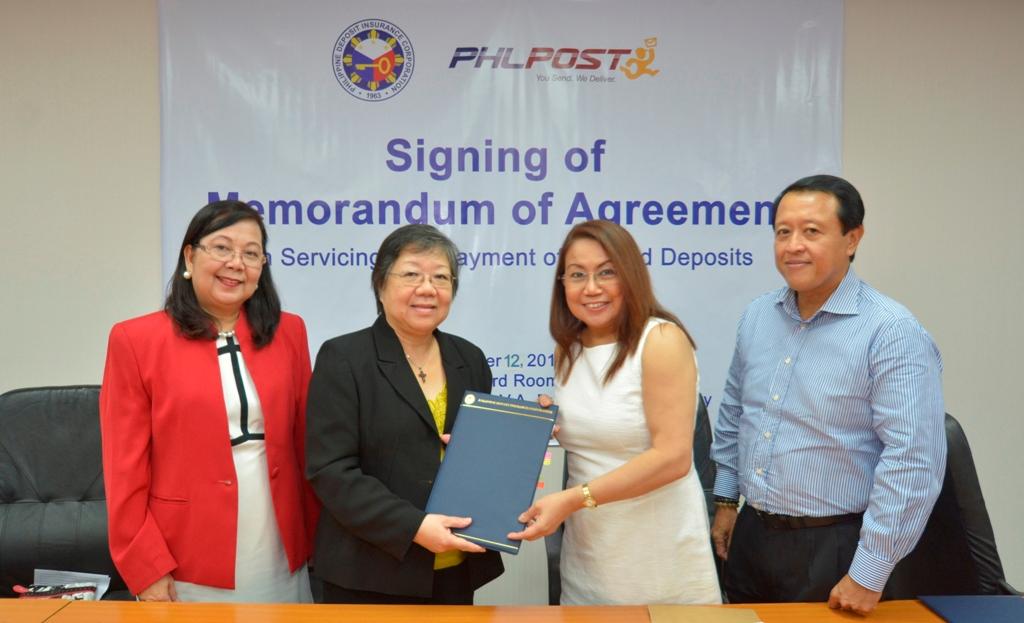
Stronger partnership for deposit insurance payment. Philippine Deposit Insurance Corporation (PDIC) President Cristina Que Orbeta and Philippine Postal Corporation (PhilPost) Postmaster General and Chief Executive Officer Ma. Josefina M. Dela Cruz agreed to confirm the PDIC-PhilPost partnership for servicing deposit insurance payments of depositors with account balances of up to Php100,000 through a Memorandum of Agreement (MOA) signed on October 12, 2015 at the PDIC Office in Makati City. Also in photo are PDIC First Vice President and Officer-in-Charge for Deposit Insurance Sector Elizabeth E. Oller and PhilPost Assistant Postmaster General Luis D. Carlos (Marketing and Management Support Service).
The Philippine Deposit Insurance Corporation (PDIC) renewed its partnership with the Philippine Postal Corporation (PhilPost) to ensure that depositors with account balances of up to Php100,000 and who are eligible for early payment of their insured deposits will receive their reimbursements less than two weeks from bank closure.
PDIC President Cristina Que Orbeta and PhilPost Postmaster General and Chief Executive Officer Ma. Josefina M. Dela Cruz signed the Memorandum of Agreement (MOA) in this regard on October 12, 2015 at the PDIC Office in Makati City.
The PDIC, in July 2015 implemented a policy to no longer require depositors with account balances of up to P100,000 to file their claims, for closed banks whose records are in order. The increase in the threshold for the waiver of filing of deposit insurance claims is consistent with PDIC’s customer philosophy to provide better service to depositors through early payment and via a more convenient payment scheme.
To benefit from the early payment scheme, depositors with deposit balances of up to Php100,000 should have complete mailing addresses in the bank records, or updated through the Mailing Address Update Form, to allow delivery of payment by PhilPost. Depositors should not have outstanding obligations to the closed bank. The early payment scheme allows depositors immediate access to their hard-earned savings. Payments are mailed to the depositors’ addresses via Postal Money Orders (PMOs) or checks.
The partnership between the PDIC and PhilPost for the payment of insured deposits started in 2010. At that time, early payment was allowed for deposits with balances of up to P5,000. This was increased to Php10,000 in 2011, to Php15,000 in 2012 and P50,000 in 2014.
PDIC President Orbeta emphasized the importance of expeditious payment especially to small depositors who need to immediately access their trapped funds. She also expressed optimism that, driven by both agencies’ desire to serve the public, said partnership will further strengthen.
Postmaster General Dela Cruz said that the partnership not only allows PhilPost to serve the people by being a conduit to the money to be released to depositors but also helps them establish the trust of people especially in far-flung areas. She said that the partnership was an opportunity for PhilPost to face and overcome challenges to restore the people’s faith in the postal service.
As the state deposit insurer whose quality management for claims settlement operations has been re-certified ISO 2008:9001 compliant, PDIC is committed to continuously improve its operations and processes to better serve the depositing public.
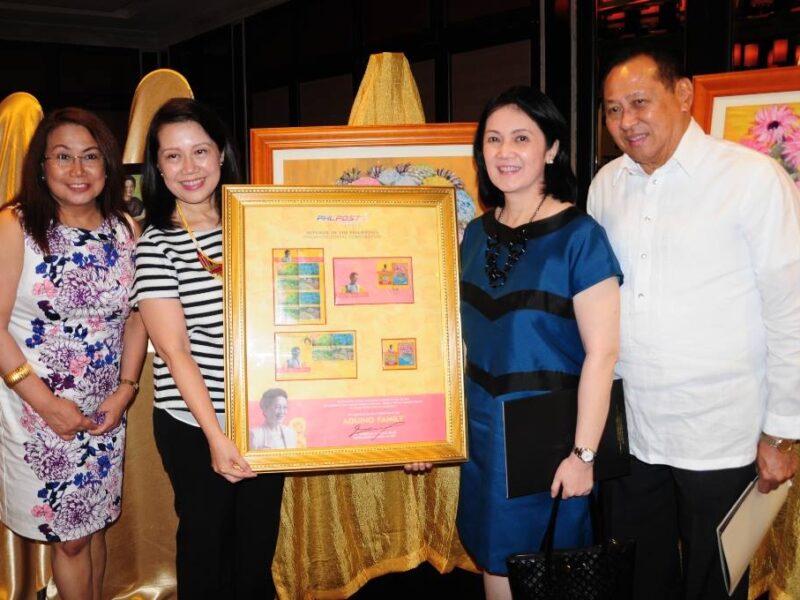
Presidential sisters Maria Elena “Ballsy” Aquino-Cruz and Aurora Corazon “Pinky” Aquino-Abellada attended the recent launching of the second series of limited edition special scented stamps and souvenir sheets, held at Sofitel Hotel- Bulong Pulungan Forum. PHLPost issues a second series of Cory Aquino floral paintings scented stamps.
Cory Aquino Stamps Series II Launching 2015 with Deedee Siytangco
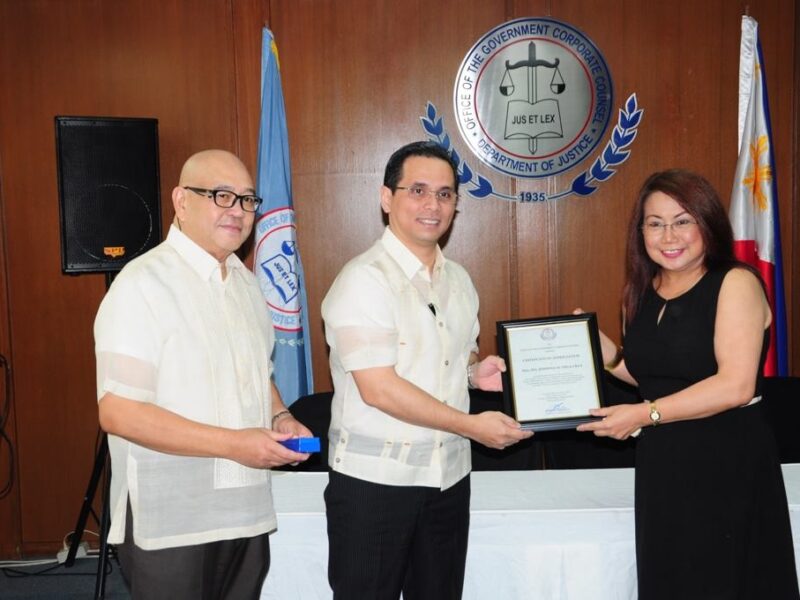
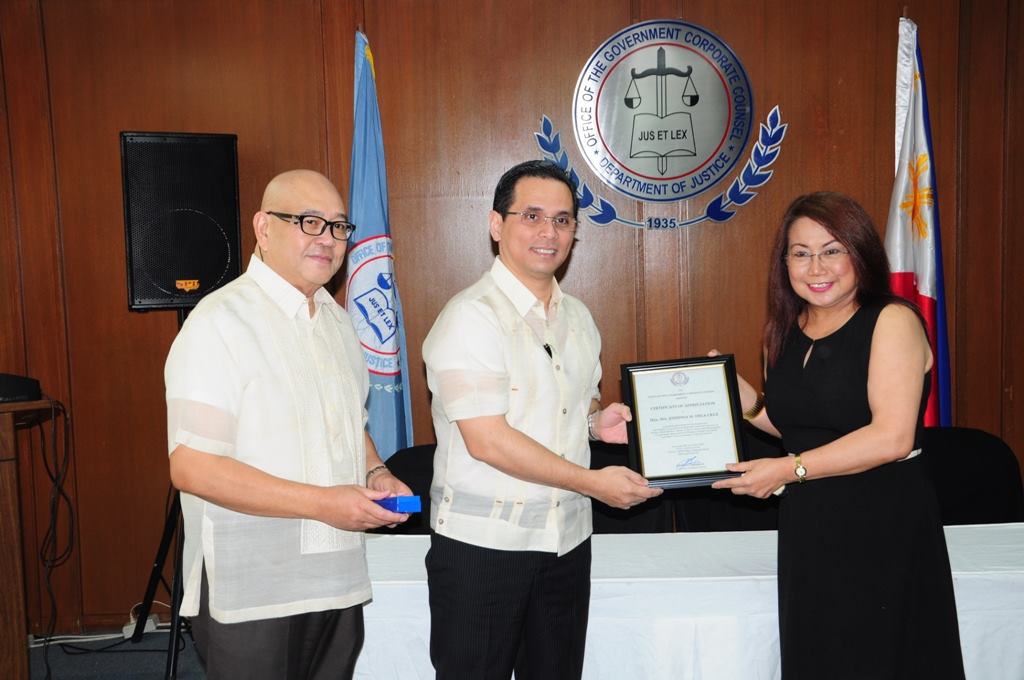
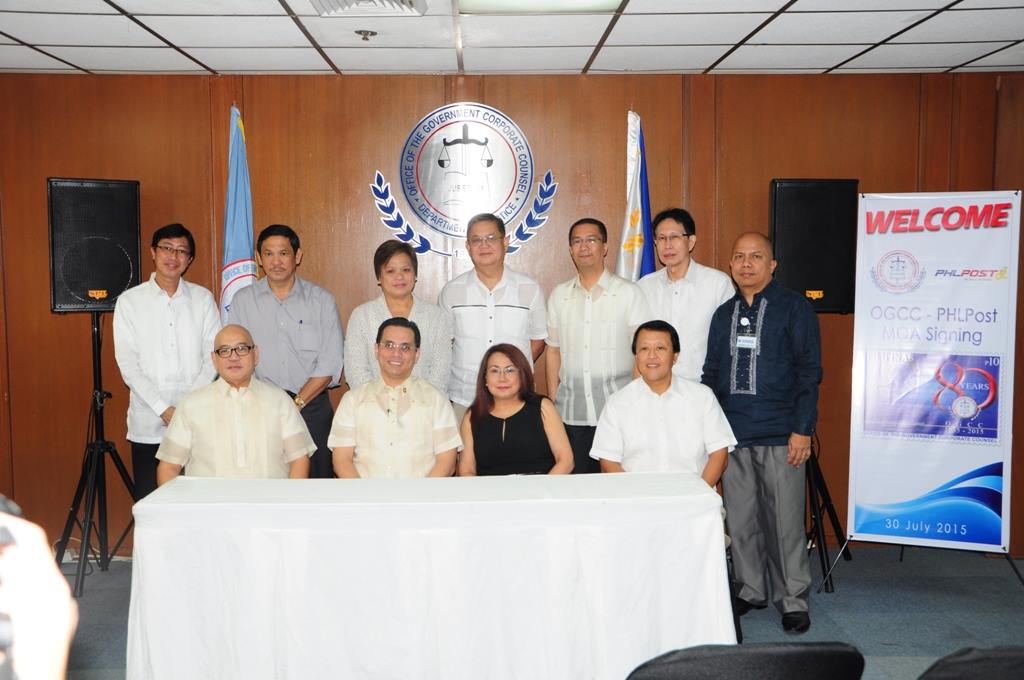
Postmaster General Josefina dela Cruz and Justice Raoul Creencia signed a memorandum of agreement at the OGCC head office in Balara, Quezon City. Phlpost issued commemorative stamps marking the 80th anniversary of the Office of the Government Corporate Counsel (OGCC).
PhlPost to issue commemorative stamps for OGCC anniversary
Evelyn Macairan – The Philippine Star August 15, 2015 | 10:00am
MANILA, Philippines – The Philippine Postal Corp. (PhlPost) will issue in December stamps commemorating the 80th anniversary of the Office of the Government Corporate Counsel (OGCC).
“The Philippine Postal Corp. takes pride in issuing the commemorative stamps, as we put on record 80 years of OGCC success,” PhlPost postmaster general Ma. Josefina dela Cruz said in a statement.
Dela Cruz recently signed a memorandum of agreement (MOA) with OGCC head Justice Raoul Creencia.
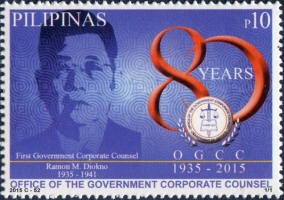
Based on the agreement, the OGCC stamps will feature the first Government Corporate Counsel, the late former senator and associate justice of the Supreme Court Ramon Diokno, and the official seal for the agency’s anniversary celebration.
Limited copies of the commemorative stamp will be released starting Dec. 1.
A commemorative stamp is often issued for a significant occasion, such as an anniversary, to honor a place, event, person or object. It is sold for a short period until supplies run out.
Office of the Government Corporate Counsel, 80th Anniversary, December 1, 2015
Office of the Government Corporate Counsel, 80th Anniversary #3637, 1 Dec 2015 The OGCC began as a small corporate counsel division under the Department of Justice on 1 December 1935. Ramon Diokno served as head of the corporate counsel division until 1941.
RAMON DIOKNO 28 March 1886 to 21 April 1954
Ramon Diokno was a prominent lawyer, politician and educator. He was elected to the Senate in 1946 where he served until 1947. In 1954 he was appointed Associate Justice of the Supreme Court.
Diokno was the founder of Colegio la Ilustracion and co-founder of Rizal University where he became a Professor.
In the first Commonwealth election held in September 1935, he was one of the chief campaign managers of President Quezon and was immediately appointed Corporate Counsel.
The Asia-Pacific region is rapidly changing and is now leading the world when it comes to e-commerce volumes. Today more and more companies are looking to establish themselves in the ASEAN market, making the World Mail & Express Asia Pacific 2015 event the perfect place to develop business relationships, expand networks and capitalize on the booming e-commerce industry in the area. This year the World Mail & Express Asia Pacific Conferenceis hosted by PHLPost and arrives in Manila from 19 – 21 October.
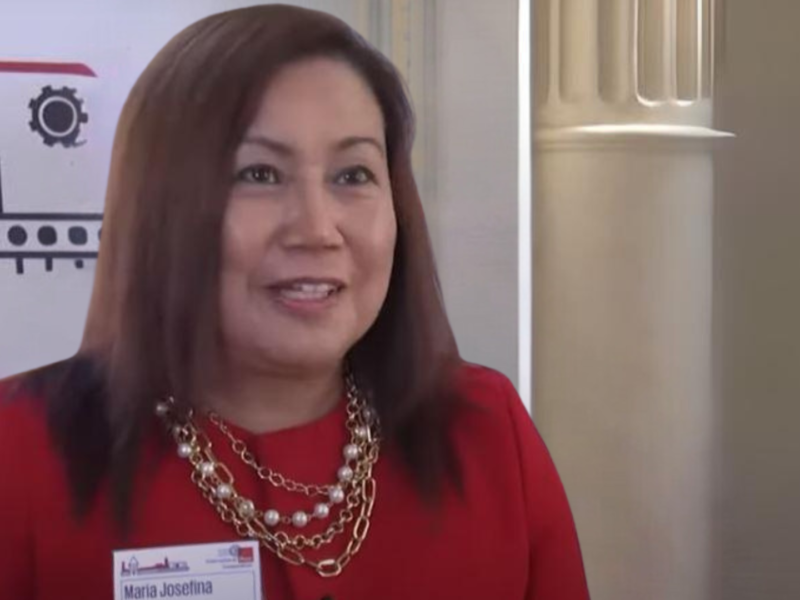
Post & Parcelspeaks to PHLPost Post Master General, Maria Josefina Dela Cruz, to find out what the event means to the newly-rebranded organisation, the connections it is hoping to make and the experiences it is keen to share with industry leaders across the world.
Why was PHLPost keen to host the conference this year?
PMG: Hosting the biggest conference of leaders and top executives in the global courier industry brings honour and prestige to PHLPost as this serves as a testament that the international community recognizes the capability and resources of the corporation to provide a conducive atmosphere for discussion and business. We at PHLPost take pride in welcoming the leaders in the postal industry to the World Mail & Express Asia Pacific event in Manila.
How does PHLPost hope to benefit from the event?
PMG: As a host and participant, PHLPost aims to use the occasion to promote its developments and demonstrate what it can offer to spur active participation in the supply chain management required in the flourishing industry of the cross border e-commerce. We hope to establish more connections, foster deeper partnerships, learn new business solutions, and adopt best practices to bolster our reengineering efforts in the corporation.
What unique postal challenges does PHLPost face?
PMG: We consider the issue on “de minimis” as the unique postal challenge confronting PHLPost. While we accept that countries do have varying thresholds for the imposition of duties and taxes, here in the Philippines, anything beyond PHP15 or less than US$1 (current exchange rate is US$1 : PHP43) is taxable. This supposed streamlined border for clearance and customs duties and other taxes has been a burden especially on the part of the micro, small, and medium sized enterprises that ventured into the e-commerce sector. Certainly, there is a need to expedite the enactment of proposed amendments in the Philippine Tariffs and Customs Law, and this includes increasing to a substantial amount of the de minimis, as this will result in the reduction on the customs compliance cost; instead, it will accelerate the delivery transactions of merchandise in favour of all the entrepreneurs, also the players in the courier business.
How is the theme for the event ” Championing e-commerce: creating new supply chains” relevant to you?
PMG: The conference theme couldn’t be more appropriate as championing e-commerce is at the core of our rebranding efforts. PHLPost aspires to bury the poor image of the corporation, and instead make way for an image of relevancy and sustainability. Today’s postal services are no longer defined by stamps, snail mail, and paper-based money order as PHLPost scales-up to express, logistics and warehousing, electronic remittance, and cross-border e-commerce.
Championing e-commerce means that the country’s government owned and controlled corporation that is PHLPost is now stepping up its role as an indispensable player in providing business solutions for micro, small and medium sized enterprises, allowing trades to move freely and easily across borders. Further, championing e-commerce will significantly drive revenue growth and profitability—areas that are crucial in achieving the Corporation’s thrust to contribute to the national treasury.
PHLPost has extensive domestic acceptance, distribution, and delivery network, as well as its worldwide mail linkages. The organisation also remains committed to bridging the gap between individuals, families, communities, businesses, and organizations. Despite the advent of modern modes of communication, PHLPost will continue to be relevant and competitive both in the domestic and international realms because it will be able to harness modern technology for greater transparency and efficient service delivery.
Why is the event important to PHLPost?
PMG: This event reinforces the relevance of PHLPost in the value chain. Committed to last mile delivery, PHLPost continues to play a vital role in the nation’s development. Modern technology, which some had previously perceived as a threat to the post’s survival, has become the corporation’s reliable partner in improving its delivery efficiency.
What can attendees learn from PHLPost?
PMG: If there’s one thing that the other posts can learn from PHLPost, it’s our program for people management, as we consider our human resources as the biggest asset of the corporation. PHLPost has embarked on a transformative reengineering program to increase efficiency, improve transparency and accountability, and strengthen operations within the corporation. By strengthening the organization, the current leadership hopes to build a sustainable business culture that provides service excellence to the Filipino people.
As a host, PHLPost hopes to showcase its reengineering experience as a model in empowering the postal employees. The corporation began sowing seeds of trust within the postal community to make the employees feel passionate about their jobs and committed to the organization. We modernized our facilities, automated our systems, implemented a refleeting program, and up scaled our products and services — all these investments to enable long-term value creation. As a result, we have already reversed the unfavourable condition in 2011, and continue to improve performance indicators.