Gov. Josie M. Dela Cruz Gov. Josie M. Dela Cruz
  • Home
  • About
  • Stories
  • Testimonials
  • Education: Key to Empowerment
  • Galing ng Bulakenyo
  • Contact
Gov. Josie M. Dela Cruz
  • Home
  • About
  • Stories
  • Testimonials
  • Education: Key to Empowerment
  • Galing ng Bulakenyo
  • Contact
Image | Other Stories
18

Walang kapaguran si Bulacan Gov. Josie dela Cruz

Walang kapaguran si Bulacan Gov. Josie dela Cruz

18

BANAT NI BATUIGAS – Bening Batuigas

HINDI na tayo dapat magtaka ng purihin ni Interior Secretary Joey Lina si Bulacan Governor Josie de la Cruz dahil sa kanyang exemplary performance sa land use bunga sa pagposte nito ng pinakamataas na approved Comprehensive Land Use Plans (CLUP) sa bansa. Mula maupo kasi bilang governor ng Bulacan si De la Cruz noong 1998, eh samu’t saring parangal na ang nakamtan niya at mukhang wala siyang balak na ibsan ang kasipagan niya tungo sa ikaunlad pa ng kanyang pronbinsiya. Noong isang buwan lang, tumanggap din si De la Cruz ng award sa ginanap na Gawad Parangal for the Most Outstanding Governor ng Pilipinas sa 7th Social Welfare and Development Forum Association of Provincial, City and Municipal Social Welfare and Development Officer of the Philippines. Ang ilan pa niyang awards ay ang Most Outstanding LGU in Population Development, Gawad Galing Pook for Reinventing Public Service, Lingkod Bayan Award from the Civil Service at ang Huwarang Pilipino Award mula sa Philippine Broadcasting Service and Bureau of Broadcast, he-he-he! Mauubusan ’ata ako ng espasyo sa sobrang haba ng accomplishment ni De la Cruz.

Kahit abo’t langit na nga ang nagawa niya sa Bulacan, eh hindi pa rin nagpapahinga si De la Cruz. Tumulak siya sa Mexico nitong linggong ito para isulong pa ang pagiging modelo ng Bulacan sa e-governance kasi malaki ang paniwala niya sa importansiya ng information technology para sa ikaunlad ng lugar niya. Sa totoo lang, umaabot na sa 33 probinsiya sa 18 bansa ang dumalaw sa Bulacan para tunghayan ang sistemang pinapairal nila sa IT program. Magsasalita rin si De la Cruz sa 5th Global Forum on Reinventing Government sa Mexico kung saan idi-discuss din sa gaganaping forum ang anim na salient points on good governance tulad ng government that cost less; quality government; professional government; digital government; deregulated government at honest and transparent government. Sana maiuwi ni De la Cruz ang marami pang teknolohiya para sa ikaunlad pa ng Bulacan, di ba mga suki?

Inamin ni De la Cruz na ang computerization ng probinsiya ay ang isang critical step hindi lamang para sa transparency, efficiency at effectiveness ng administration niya kundi para na rin sa sustainability for various reforms. Sinisiguro lang ng gobernadora na ang lahat ng investment na pumapasok sa Bulacan ay para pampasaayos ng kabuhayan ng mga Bulakenyo. Nasa tamang landas si Gob, di ba mga suki? Gusto rin ni Dela Cruz na ipamahagi ito sa iba pang interesadong probinsiya pero sa kasunduan na kilalanin nilang ang Bulacan nga ang original source at may-ari ng softwares. O kayong mga taga-ibang planeta… este taga-ibang probinsiya diyan, ano pa ang hinihintay n’yo?

Kaya lang may casualty din pagdating dito sa IT program ng Bulacan. Mula kasi sa 1,810 empleyado eh naging 1,752 na lang noong sumunod na taon bunga sa ginawang major reorganization ni De la Cruz. May maapektuhan talaga subalit ang kainaman niyan ’yaong mga best and brightest and matitira. ‘Ika nga tulad sa commercial sa TV, ang hirit ng taga-Bulacan sa ngayon kay De la Cruz ay: Isa pa nga!

Source: PhilStar Global

Other Stories | Standard
16

Constituent Responsive Governance Project, Listening to the Voice of the Constituents

Constituent Responsive Governance Project, Listening to the Voice of the Constituents

16

2002

For a petite woman, Bulacan governor Josefina dela Cruz packs a lot of dynamism and passion, not to mention, sense.

Unlike the traditional politicians who want their constituents to be heard only come election time, Governor dela Cruz is feedback-crazy.

“Ang hirap sa politico, napapaligiran kami ng mga sipsip. Hindi tuloy namin nalalaman kung ano ang tama. (Our problem as politicians is that we are surrounded by people who always want to please us. We have no way of knowing what’s right.),” she says.

These people, she says, understandably have their own vested interests and agendas. They isolate the politicians from their constituency, and render policy making a hit-or-miss affair.

“We wanted something more scientific… The sentiment of those who speak is not necessarily the sentiment of those who choose to be quiet. So our dilemma is, how do we know what the people really want?” she argues.

Under the Constituent Responsive Governance Project, the Bulacan provincial government used the survey research method to get a truly representative citizen’s feedback on projects. By doing so, chances for costly mistakes are minimized.

Four programs and projects were pre-tested: the health insurance program, solid waste disposal, feedback on real property tax billing statement, and the acceptability of a community radio. In each case, the provincial government found that the surveys lessened the chance for mistakes.

A case in point is health insurance. The survey showed only 35% of Bulacan households were aware of what health insurance was all about yet some were still not insured. This showed the need for a health insurance system in the province. However, respondents were concerned about the premiums they have to shell out every month and the extent of coverage for the beneficiaries. Thus, they were also polled on the price they were willing to pay for health insurance.

Based on these findings, the provincial government launched on February 24, 2000 the “Medicare Para sa Masa, Kalusugan Mo Katulong Ako” program. The local government, however, chose not to heed one of the findings in the survey: for the province to set up its own health insurance system instead of getting Philhealth,the national healthcare provider.

Two years after the program was launched, the provincial government realized the high cost it is paying for Philhealth premiums. The governor now regrets the decision to go on with the program against the findings of the survey.

Another poll was on the acceptability of the community radio station. Through pre-testing, the provincial government found out that while most Bulakeños get their information from the radio, they tune in to stations that have music, as well as news and information. This enabled the provincial government to change the station’s programming to suit its constituency’s tastes and lifestyles.

Through the survey research method, Bulacan has placed project planning into a higher plane, one that sets aside political interests.

“Surveys make decisions apolitical,” Governor dela Cruz says. Proof that it is not politically costly, she says, is the fact that “I’m still here.”

This program is recognized as one of the Ten Outstanding Programs in the 2002 Galing Pook Awards.

Source: Galing Pook

Other Stories | Standard
17

Senate, Academe Honor Country’s 4 Most Outstanding Local Leaders

Senate, Academe Honor Country’s 4 Most Outstanding Local Leaders

17

The Senate and leading academic institutions honored recently the first winners of the newly launched Local Government Leadership Award during ceremonies that coincided with the celebration of the Senate’s 86th anniversary.

Sen. Aquilino Pimentel Jr., acknowledged as the father of the Local Government Code, said the award honors and recognizes local leaders and the exemplary role they have played in local governance within the last 11 years of decentralization.

The winners of the first LGL Award were Bulacan Gov. Josefina de la Cruz, most outstanding governor; Mayors Tomas Osmeña of Cebu City and Franklin Quijano of Iligan City, most outstanding city mayors; and Concepcion (Iloilo) Mayor Raul Banias, most outstanding municipal mayor.

De la Cruz finished management engineering, cum laude, and psychology, magna cum laude, both at the Ateneo de Manila. During her term as Bulacan governor, she won the Konrad Adenauer Local Government Award (1999), Most Outstanding Local Government Unit in Population Development (1999), Gawad Galing Pook Award for Reinventing Public Service (2000) and Lingkod ng Bayan (2000).

Osmeña, younger brother of Sen. Sergio Osmeña III, is also a recipient of several national awards for tourism, street children programs, computerization, countryside development and anti-drug programs.

Quijano, the son of a mechanic and a public school teacher, was a consistent honor student during his school days. He finished Economics, cum laude at the University of San Carlos in Cebu City. As Iligan City mayor, he transformed the city with his numerous projects, including the integrated bus terminal, road widening, overpass and drainage improvement and urban poor housing. Under his term, marginalized sectors were organized and federated, and livelihood and agriculture were given added attention.

Banias is on his second term as mayor of Concepcion, Iloilo. After finishing his studies in medicine, he volunteered in a medical outreach program in Concepcion and that started his career as a public servant. He won as No. 1 councilor of the town in 1992 in his very first stint in politics although he ran as independent. He won unopposed as vice mayor in 1995.

The winners were given P100,000 each. Senate President Franklin Drilon sweetened the award by announcing that they, along with their fellow finalists in the search would have added benefits via the Priority Area Development Fund of senators.

As directed by Drilon, each of the four governor finalists would get P2 million worth of projects; each of the five city mayor finalists, P1 million in projects; and each of the 10 municipal mayor finalists, P500,000.

Dela Cruz’s fellow finalists were Governors Isagani Amatong of Zamboanga del Norte, Bartolome Marasigan of Oriental Mindoro, and Leonardo Roman of Bataan.

The fellow finalists of Quijano and Osmeña were Mayors Santiago Barcelona of Escalante City, Albert Raymund Garcia of Balanga City, and Randolph Ting of Tuguegarao City. — Efren Danao

Source: PhilStar Global

Other Stories | Standard
24

LOCAL GOVERNANCE STRATEGY IN DECENTRALIZING POLITY

LOCAL GOVERNANCE STRATEGY IN DECENTRALIZING POLITY

24

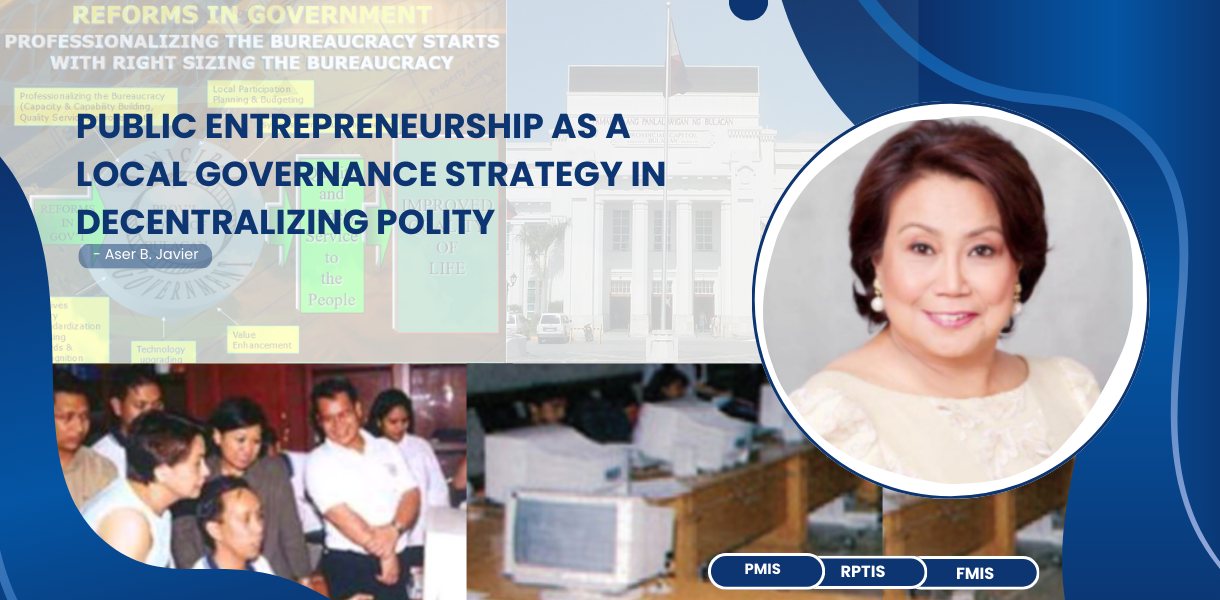
PUBLIC ENTREPRENEURSHIP AS A LOCAL GOVERNANCE
STRATEGY IN DECENTRALIZING POLITY
-EXEMPLARY INITIATIVES FROM THE PHILIPPINES-

by: Aser B. JAVIER

Public Entrepreneurship as Strategy for Decentralizing Polity

(page 25)

The choice or selection of the three case sites as the setting for the study is justified. All three local government units(LGUs)have achieved Hall of Fame status in the Innovations and Excellence in Local Governance(Gawad Galing Pook Awards)sponsored by the Ford Foundation, meaning they have been awarded for exemplary local governance for five  consecutive years. Only seven LGUs have achieved Hall of Fame status since the establishment of Galing Pook Awards in 1993, with a total of 136 LGUs awarded. The Hall of Famers are two provincial governments(Bulacan and Davao, four city governments(Marikina City, Puerto Princesa City, Naga City and San Carlos City)and one municipality(Irosin) . The three LGUs are also ideal for public entrepreneurship research because, as nationally recognized exemplary local governance performers, they have instituted a variety of programs that support public entrepreneurship. They also have a common agenda incorporating and sustaining developmental and political gains for wider avenues of administrative reforms, creativity and innovations in governance and increased peoples’ participation.

Energizing the Bureaucracy in the Provincial Government of Bulacan

Bulacan was the site of the drafting and ratification of the famous 1935 Philippines constitution. More than its historical pride, the province of Bulacan became famous in local government circles when it ventured into entreprenurship programs even before the 1991 Local Government Code, under the stewardship of a private sector executive, Roberto Pagdanganan. Pagdanganan was challenged by the prevailing situation in the province where a few elite controlled the state of governance and there were poor investments, inadequate infrastructure and generally negative attitude towards the bureaucracy. Pagdanganan was given the electorates confidence based on his Five Point Development Agenda-(1) sustainable economic development, cooperatives as the centerpiece program,(2)peace and order, (3)youth, cultural and historical development,(4)effective delivery of health and social services ; and   (5) instituting reforms in the bureaucracy.

The Five Point Agenda’ s major component was reforms in the bureaucracy. Josefina dela Cruz was Pagdanganan’ s vice-governor and member of the group responsible for the initial attempts at reforming the bureaucracy. The reigns of power were handed-over by the people of Bulacan to dela Cruz as governor from 1998 to present.

The Five Point Agenda continued by dela Cruz pursued the concept of reinventing the bureaucracy of the provincial government. From an outsiders’ perspective, the idea of a decentralized polity based on energizing the bureaucracy is not strategically new, but such activity is crucial to Bulacan because she believes in putting her ‘home’ in order first. Before she can accomplish more, she must be backed-up by an efficient and effective bureaucracy.

The Energizing the Bureaucracy program is a re-organization program that aims to increase the level of workforce productivity in the long-term and match the needs and priorities of the provincial government in the short-term. It is the third attempt at reorganization in the province and the only one among the three initiatives that was completed. Governor dela Cruz created a Management Evaluation Group tasked of assessing the employee’ s performance, duplication of functions and the general organization structure of the province. The output was used by the newly created Reorganization Committee(with a mandate from Executive Order No.7)for a planned two-pronged reorganization program-streamlining and capacity building. It combines the downsizing of personnel and streamlining of administrative processes and at the same time providing the training of personnel for improving job responsibilities.

The streamlining of positions resulted to a relatively lean workforce number of 1,737 as of June 30, 2001 compared to 2,052 as of December 31, 1995. The streamlining has resulted in the abolition of 315 positions since 1995. Consultation with various offices were made by the re-organization team and those whose performance evaluation were below the standards set by their office supervisors were either retired, transferred to another office, or contracts were not renewed or terminated from the service. Those personnel affected were personally met by the governor and consequently downgraded the heated emotions. As a result of this simple managerial initiative of the governor, possible legal cases were avoided. The re-organization also opened up opportunities for competent personnel to rise in the hierarchy through transfer, promotion and direct competition for available positions. Previously, promotion can happen only when there is either death or resignation of employees or through the creation of new positions out of patronage. As Governor dela Cruz puts it, lets bring in good people to the bureaucracy because of their qualifications and merit instead of patronage. Likewise an employee handbook was conceptualized to inform employees and remind them of their responsibilities. Whereas previously, employees look at their jobs from how they have been structured through their own experiences in the bureaucracy, now, a standard governs their actions on top of the minimum output required of their positions.

Also, as part of the accompanying strategies for the reorganization, management cell groups were organized with five members in each department to discuss cases, values and guidelines. The group discussions center on problem resolution or discussion of management values vital to the organization. This project is part of the long-term vision of changing the culture of government personnel and in making Bulacan a center for the development of a culture of excellence(Bulacan, Pandayan ng Kultura ng Kahusayan).

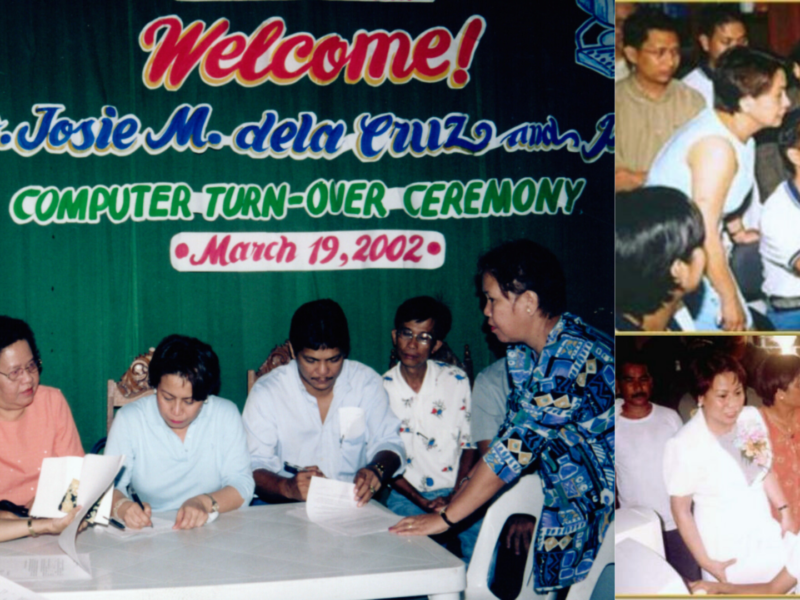
Also part of the reorganization program is the drive for administrative efficiency, which was done partly through the abandonment of some obsolete systems and procedures through their computerization programs. Full computerization of strategic operations was envisioned as part of energizing the bureaucracy. Government systems/operations such as personnel records, real property tax records, records management and payroll management systems are major processes that are being computerized for ease of storage and of course, efficiency. Personnel information record or  Civil Service 201 files are slowly being computerized enabling the Human Resource Office to determine offhand the administrative(e.g. personnel benefits, leave credits, etc.)and technical information needs(e.g. training)of employees. The province of Bulacan was one of the pioneers among the LGUs in the Philippines to computerize its administrative operations.

In terms of revenue generation, delinquent taxpayers are easily identified in the real property tax database. As a result of the information accessibility, new programs to enhance collection of real property taxes were made. An education campaign aimed at increased awareness on the value of taxation is also currently being made in schools, business and the municipalities. These efforts have resulted in the increase in revenue collection in terms of real property tax. In 1998, it has even exceeded targets by 18%.

Governor dela Cruz believes that as part of the decentralization of powers to the local government, part of her authority should also be delegated to the people to empower them. Governor dela Cruz’ idea was to separate her functions as a strategic decision-maker from daily operational management. In this manner, the strategy utilized by the governor is to band together the department heads to form her management core group aside from the outside networks from the academe that provide for the validation of ideas. Since they are now considered leaders with specific functions as management executives, they are also on their toes as they ‘hobnob’ with reputable persons from the academe as part of Governor dela Cruz management circle. They do not function as de-facto leaders without accountability, which usually characterize local level politics in the Philippines. The new initiative is a far cry from the traditional top-down decision-making, centralized hierarchy that characterized the management of the province then.

Further, the creation of a special project office under the Office of the Governor signaled the provincial government’ s intention to pursue vigorously innovative projects outside the stringent rules of the bureaucracy. As Governor dela Cruz said,“I am not happy with the status quo.” The special projects office function as an academy and provides the necessary inputs to the governor and the departments. The inputs are based on citizens polling and feedback mechanisms through surveys that they implement under the tutelage of the Asian Institute of Management(AIM)consultants.

The LGU perspective of public entrepreneurship viewed from the context of energizing the bureaucracy follows the trend of the new management bandwagon in local governance. Concurrently, however, the community perceives public entrepreneurship as assistance to business and industry, poverty alleviation and administrative reforms executed by the LGU. The difference in the perspective of the LGUs and the community lies in the fact that the role of the LGU in the community may not be sufficient enough to completely saturate the community with information or that the LGU has not been able to fulfill all the demands of the public. The strategy of prioritizing reforms in the bureaucracy has dwindled the notion of public entrepreneurship as a concept known only among and within the local government actors.

As a means to enact public entrepreneurship programs, the development agenda played major roles primarily hinging on energizing the bureaucracy program. The creation of the special project office under the office of the governor is a step toward veering away from the restrictive boundaries of bureaucracy. The support of the legislative council through the resolutions and ordinances were main pillars used as legal instrument to back public entrepreneurship programs.

While the province has ventured into reforms, some challenges were also identified. The measures to quantify the results of the reorganization in terms of personnel productivity and an evaluation  of the energizing the bureaucracy program are still management challenges. Also, to quell the ‘political color that might have been painted’as a result of the reorganization, a simple evaluation mechanism and program reporting is a logical necessity. In addition, it has been noted that locally-sourced income has decreased from 30.13% share in 1999 to 15.40% in 2000 despite the initiatives of enhancing real property taxation through the computerization efforts. These are political and management challenges that need to be hurdled by the province.

The principles of public entrepreneurship in Bulacan however, have not gone unnoticed. Bulacan has garnered the distinction of excellence in local governance through the many awards they have received, both international and national. They have become a Hall of Famer in the Gawad Galing Pook awards for exemplary governance for winning three consecutive awards. They were also a recipient of the 1999 Konrad Adenauer Local Governance Award, the Gawad Pamana ng Lahi Award for outstanding local governance for 1996 and 1997 and recently were recognized by the Human Development Network for having the highest HDIs in the Philippines.

Source: Forum of International Development Studies, 21 (Mar. 2002) PUBLIC ENTREPRENEURSHIP AS A LOCAL GOVERNANCE STRATEGY IN DECENTRALIZING POLITY -EXEMPLARY INITIATIVES FROM THE PHILIPPINES- by: Aser B. JAVIER


Other Stories | Standard | Video
22

Reinventing Public Service

Reinventing Public Service

22

2000

When a shared vision and mission is pursued with greater consistency, transparency and political will, nothing can stand in the way of an effective reengineering intervention. Such is the case of Bulacan’s Reinventing Public Service Program of Bulacan.

The LGU’s vision was to create a strong middle class as the core of the citizenry with equal access to opportunities and services. However, in 1998, it faced many challenges. Among these were the need to improve the bureaucracy and reorient the employees, eliminate irrelevant systems and procedures, and raise the morale of the personnel by providing incentive mechanisms and overcoming resistance to change.

The local government’s first move was to reorganize its structures to maximize financial, property, and human resources. A major change was the merging of the Provincial Treasurer’s Office and the Provincial Assessor’s Office to increase efficiency and accountability, and ultimately increase tax collection. Initial resistance to this merger was eliminated through discussions with those concerned, and reassignments or financial packages for the displaced. The merger resulted in a reduced number of positions from 82 to 64 with minimal dislocation for the affected 22%.

Other changes involved the creation of offices, such as the Provincial Disaster Coordinating Office and the expansion of others into full departments, such as the Provincial Youth, Sports and Employment Development Office to focus on generating employment. Other offices such as the Provincial Environment and Natural Office and the Provincial Cooperatives and Enterprise Development Office were streamlined for efficiency. The Management Information Systems was upgraded to respond to computerization. Aside from systems and procedure improvement, the LGU set up a quality service improvement program in its offices, encouraged local participation in planning and budgeting, and provided incentives such as salary standardization, housing, awards, and scholarships to its staff.

The impact of the reorganization of the local government was immediate. Real property tax collection increased by 25.48% and total revenue from quarry tax, mining and other fees increased by 72% within a year. The province saved P13.8 M in personnel services and reaped a surplus of P5 M in 1999. Computerization provided greater accountability and transparency, improved information access and effective and efficient service delivery, and saved the provincial government P2.57 M. In terms of people’s empowerment, everyone in the provincial government could claim ownership of the reorganization effort. Overall, reinventing public service in Bulacan has resulted in quality and timely service to the people, and has contributed to their improved quality of life.

This program is recognized as one of the Ten Outstanding Programs in the 2000 Galing Pook Awards.

Source: Galing Pook

Image | Other Stories
19

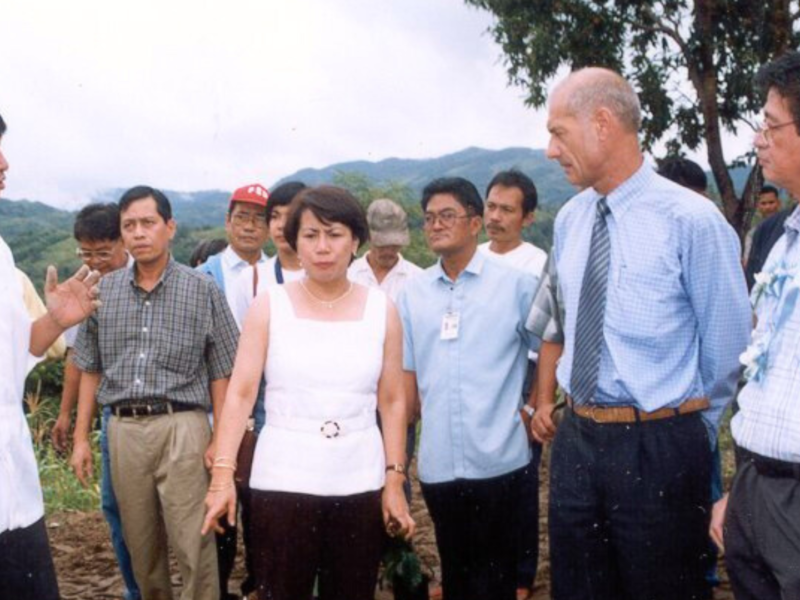
Gov. Josie’s and Nestle Officials’ visit at Coffee Farm in DRT

Gov. Josie’s and Nestle Officials’ visit at Coffee Farm in DRT

19
Image | Other Stories
20

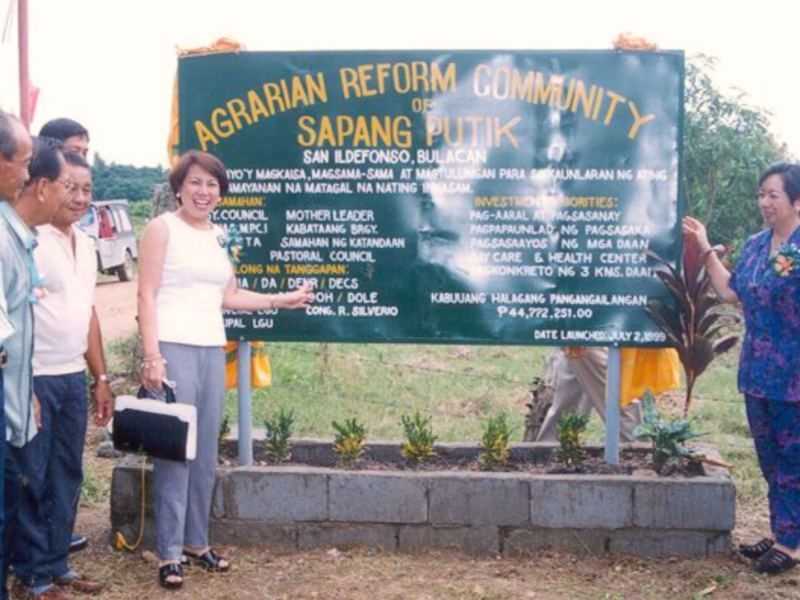
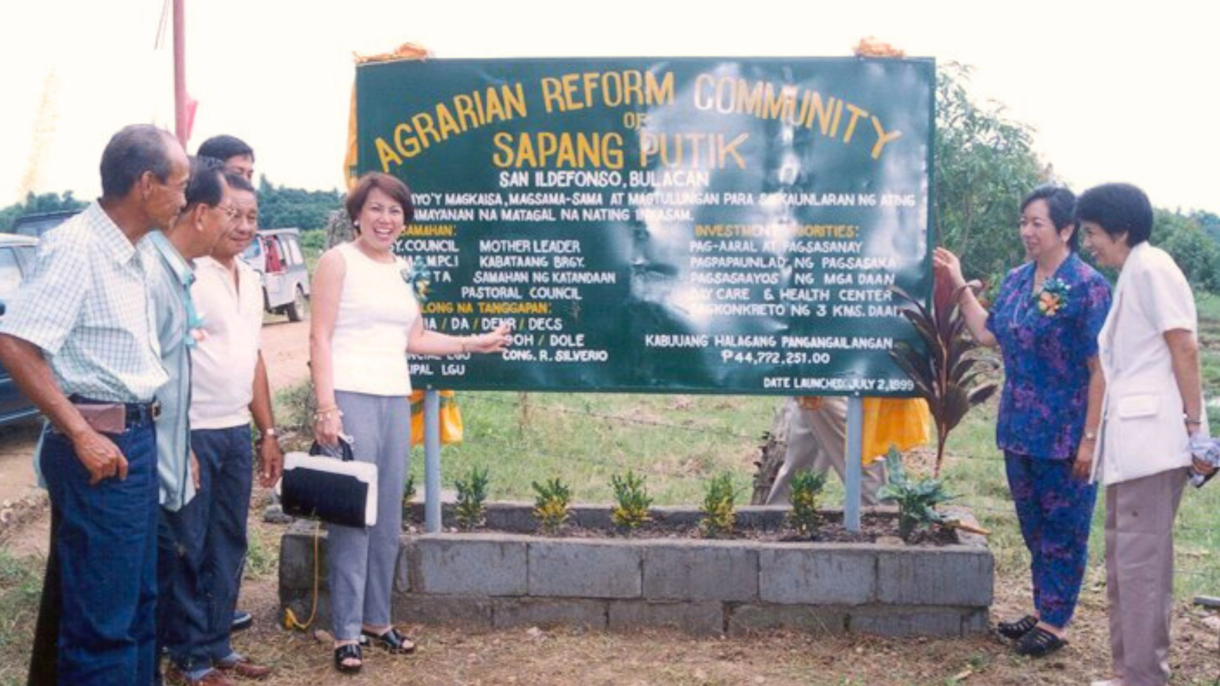
Gov. Josie’s visit at Agri Reform Community

Gov. Josie’s visit at Agri Reform Community

20
Image | Other Stories
20

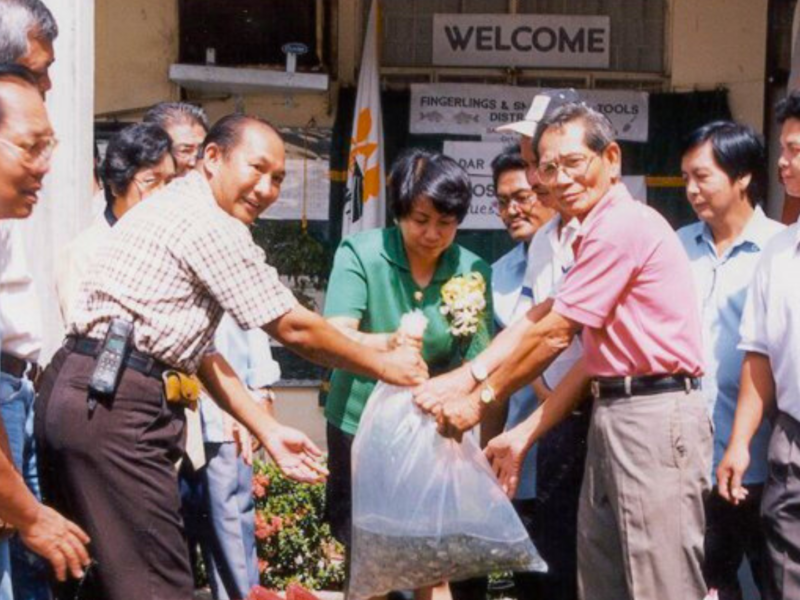
Distribution of Fingerlings with DAR Officers and PAO Jess De Guzman

Distribution of Fingerlings with DAR Officers and PAO Jess De Guzman

20

Posts pagination

  • 1
  • 2
  • 3
  • 4
  • 5
  • 6
  • 7
  • 8
  • 9
  • 10

© 2025. Josie M. Dela Cruz. All rights reserved.