Gov. Josie M. Dela Cruz Gov. Josie M. Dela Cruz
  • Home
  • About
  • Stories
  • Testimonials
  • Education: Key to Empowerment
  • Galing ng Bulakenyo
  • Contact
Gov. Josie M. Dela Cruz
  • Home
  • About
  • Stories
  • Testimonials
  • Education: Key to Empowerment
  • Galing ng Bulakenyo
  • Contact
Other Stories | Standard
76

Natatanging Babae 2025 – Recognizing Bulakenya’s Achievements

Natatanging Babae 2025 – Recognizing Bulakenya’s Achievements

76

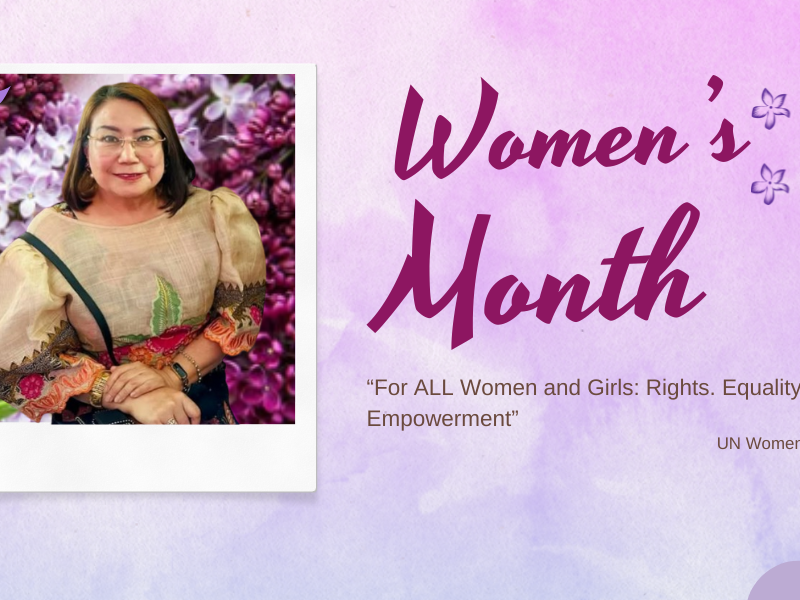
During a significant event celebrating Women’s Month, the esteemed former Governor of Bulacan, Josefina M. Dela Cruz, and the distinguished former Chief Justice of the Philippines, Maria Lourdes Sereno came together to celebrate the accomplishments of women for “Natatanging Babae 2025” of the Provincial Government of Bulacan at the Pavilion in Hiyas ng Bulacan Convention Center, Malolos City, Bulacan.

Other Stories | Standard
66

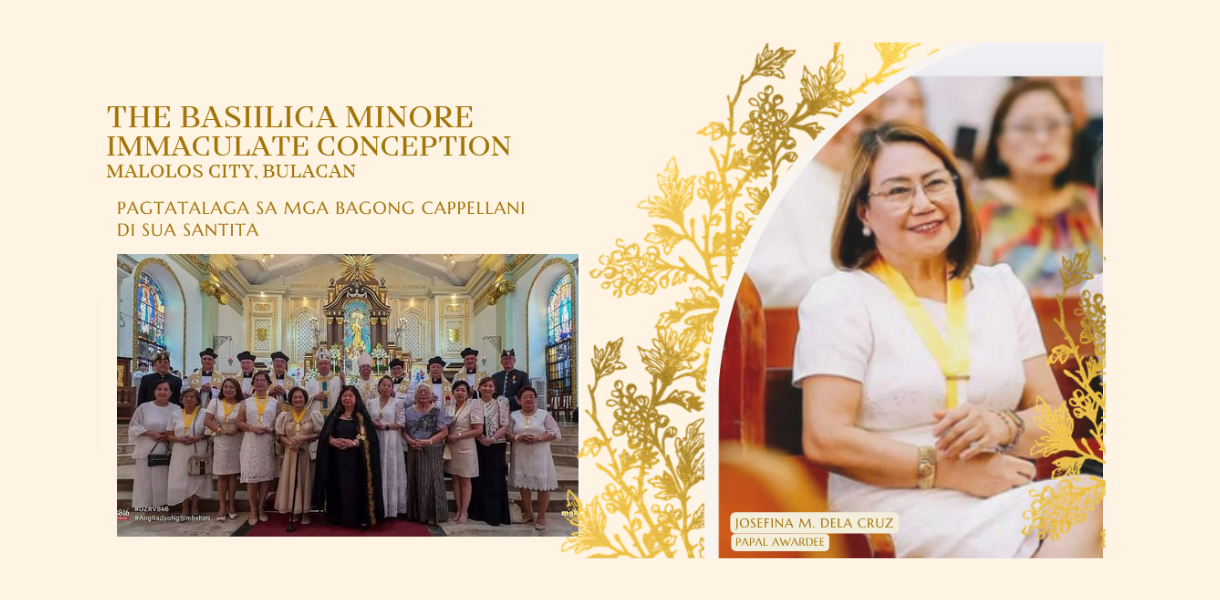
Pagtatalaga Sa Mga Bagong Cappellani Di Sua Santita

Pagtatalaga Sa Mga Bagong Cappellani Di Sua Santita

66

Ika-63 na Guning-Taong Pagkakatatag Ng DIYOSESIS NG MALOLOS

Tagapagdiwang:
Lub. Kgg. Dennis Cabanada Villarojo, D.D.
Obispo ng Malolos

THE MALOLOS CATHEDRAL IN THE HISTORY OF THE LOCAL CHURCH OF BULACAN AND IN THE PHILIPPINES

Written by: Robby V. Dela Vega, Member – DCSC Research Team

In the City of Malolos, Bulacan, the Cathedral and Basilica Minor of the Immaculate Conception in Malolos is located – the central church and seat of the Bishop of the Diocese of Malolos. It has a colorful history like the great buildings of our people and our faith.

In the beginning, the seed of the Christian faith was planted in the town of Malolos by the Augustinian Missionaries under the leadership of Fray Diego Ordoñez de Vivar, O.S.A. There are two accounts of the founding of the Christian community in Malolos. First, according to Fray Juan Manuel Tombo, O.S.A., it was the year 1578 when Fray Diego erected the sign of the cross at the same time as building a chapel made of bamboo and thatch in an area called “Malolos” which is now occupied by the village of San Agustin . Second, the year 1580 when Fray Vivar built a chapel on the banks of the Canalate River.

This area is considered today as the cradle of Christianity in Malolos. But due to the frequent flooding and the desire to find a more suitable center for the Christianization and Hispanization of the natives, the missionaries soon entered the town until they reached a place with a large lake or “to eat”. In this place, a stronger building was built that was used by the Augustinians and natives for worship.

On June 11, 1580, in a meeting of the Order of San Agustin held at the Convent of Tondo, the Parish and Convent of Malolos was established under the patronage of Inmaculada Concepcion. In this meeting, Fray Matheo de Mendoza, O.S.A. was appointed. as the first Parish Priest.

In the year 1601, Fray Roque Barrionuevo, O.S.A. built the small stone church and convent where it stands today. It is medium in size but made of durable materials. In 1630, a larger stone church was built during the time of Fray Mateo de Braceros, O.S.A. A few decades later, a larger stone church was built and completed in 1673. Another larger church was built again using stronger materials during the time of Fray Fernando Sanchez, O.S.A. in 1734, which was continued in the office of Fray Juan de Meseguer, O.S.A. in 1740 and finished in 1744 during the time of Fray Manuel Baceta, O.S.A. Over time, the church continued to be renovated. In 1753, the then Parish Priest, Fray Jose de Vivar, O.S.A., made renovations to the church.

With the conquest of Manila by the British in 1762, the Spanish were forced to leave the capital to the north. In 1763, a capitulo intermedio was held in the convent of Malolos – an unusual meeting of Augustinian friars led by the then Prior Provincial, Fray Remigio Hernandez, O.S.A. Here the assignments were agreed upon to all the religious Augustinian calzados on what they should do in the dangerous situations they may face due to the foreign occupation.

When visited by Fray Joaquin Martinez de Zuñiga, O.S.A. the Malolos in the year 1800, the Augustinian praised its convent because it is said to be beautiful and has excellent pillars and cornice, despite its dimensions not being suitable. According to him, its clausura will be very narrow. It has nice rooms but it is not comfortable for its user. According to him, it is dark inside the church and the decorations and designs of its retablo are out of date.

In 1813, a great fire destroyed the church during the tenure of Fray Dionisio de Santa Maria, O.S.A. It was completely destroyed in 1816 due to an earthquake. After successive calamities, the construction of a new church began in 1817 under the leadership of Fray Melchor Fernandez, O.S.A. It measures 80 vara in length and 17 vara in width. After this, the convent with the arqueria on the patio was also repaired and a wide living room was installed. The bell tower was also repaired and a torre de relo was built.

He also built a campo santo or cementerio Catolico whose chapel served as the first church of Barasoain when it was separated from Malolos. On October 14, 1826, the Divine Consecration was performed in the church led by Bishop Francisco Alban of the Diocese of Nueva Segovia. Year 1854 when the bell tower and roof of the church were damaged due to a strong earthquake which was temporarily replaced with bamboo and thatch.

On June 3, 1863, another strong earthquake destroyed the church and convent and toppled its torre de reloj and bell tower. It was reorganized during the tenure of Fray Ezekiel Merino, O.S.A. with Don Luciano Oliver as the architect which was completed in 1872. It was again damaged by a strong earthquake in July 1880. Fray Manuel Tombo began repairing the damaged parts of the church and convent in 1883. It was completed in 1884 during the time of Fray Felipe Garcia, O.S.A.

On December 12, 1888, twenty young women from Malolos dared to take advantage of the opportunity to present their request to build a school to learn the Spanish language while visiting Malolos, who was new to the Governor General of the Philippines, Don Valeriano Weyler. They wrote a letter and made every effort to enter the room where the Governor General was in the Convent of the Church of Malolos. Although prevented by the Augustinian friars, the girls were still able to carry out their goal led by Alberta Uitangcoy.

On September 15, 1898 to March 29, 1899, Hen. Emilio Aguinaldo the convent and church as the Presidency of the First Republic of the Philippines. Good Friday, March 31, 1899, on his orders Filipino soldiers burned the church while fleeing the American forces. After this, the army of Hen. Arthur MacArthur the church and made it a headquarters. Only the pavement, belfry and walls of the church remain, while only the stones of the convent’s structure remain.

When the war ended, the administration of the church was transferred to the management of the Filipino priests of the Archdiocese of Manila. In order to meet the spiritual needs of the people of Malolos in the restoration of peace, a temporary church made of bamboo and thatch was built in the place where the convent burned P. Gregorio Crisostomo through the contribution of the whole town.

The construction of the church was started in 1902 during the tenure of P. Magdaleno Castillo. In the time of Mgr. Jose Jovellanos, he bought the old retablo and altar of the Lopez Family of Trozo, Manila to be used in the renovated church. Year 1934, during the tenure of P. Vicente Fernandez when he asked Mr. Alejandro Caudal to make the bigger retablo and altar mayor with the help of Dr. Luis Santos. Here the image of the Inmaculada Concepcion sculpted by Mr. Teodoro Ople is worshipped. The church was inaugurated by a consecration in 1936 presided over by the Most Rev. Michael O’Doherty, Archbishop of Manila. It was also during P. Fernandez’s time when Mr. Agustin Isidro from Kanalate made the two minor altarpieces. In 1948, a pulpit was built for the church. Meanwhile, Estanislao Bautista made the altarpiece of the Blessed Virgin of the Miraculous Medal using pieces from the old altarpiece from Trozo.

In commemoration of the 100th anniversary of the Dogma of the Inmaculada Concepcion in 1954, extensive renovations were carried out in the church under the leadership of Reb. P. Pedro Abad together with a committee led by Dr. Luis Santos. In this renovation, the windows of the church were lowered and enlarged, the paving of the sidewalk was repaired, new chandeliers and Via Crucis were installed, the patio was paved and a new baptistery was built which was blessed by the Lub. kg Rufino Santos, Archbishop of Manila.

In 1956, the National Historical Society placed three historical markers in the church in recognition of the church when it became the Presidency of the Republic of the Philippines attended by Gen. Emilio Aguinaldo as the guest of honor.

On March 11, 1962, the church was elevated as the cathedral of the newly established Diocese of Malolos covering the Province of Bulacan and the City of Valenzuela through the Apostolic Constitution Christi Fidelium of Pope John XXIII and appointed the Most Rev. Manuel P. Del Rosario, then Bishop of Calbayog, as its first bishop.

On September 13, 1975, the sign for the Siar tree was inaugurated in the cathedral courtyard in memory of the tree as a witness to the colorful history of the cathedral when it was turned into the Palacio Presidencial by Hen. Emilio Aguinaldo in 1898 to 1899.

In preparation for the consecration of the cathedral in 1976, a reorganization was carried out inside the cathedral led by Bishop Cirilo Almario and Dr. Juan T. Reyes. During that time, the collegium was removed to make way for the expansion and elevation of the sanctuary. Its two large windows are also equipped with stained glass with paintings of the Blessed Virgin of Lourdes and the Blessed Virgin of the Miraculous Medal. The construction of the new convent that will serve as the residence of the Bishop of Malolos and diocesan offices also began at that time.

On April 9, 1999, during the tenure of the Most Rev. Rolando Tria Tirona, O.C.D. the then Pope John Paul II elevated the Cathedral of Malolos as a Minor Basilica. It was formally announced in a mass on December 4, 1999 presided over by His Eminence, Jaime Cardinal Sin and the Most Rev. Antonio Franco, Apostolic Nuncio to the Philippines. After the 2017 update on the status of basilicas, only the Manila Cathedral and the Malolos Cathedral are the remaining cathedrals in the country that have both titles as Cathedral and Basilica.

Year 2012, during the tenure of the Most Rev. Jose F. Oliveros, celebrated the Golden Jubilee of the Diocese of Malolos. The construction of the Diocesan Pastoral Center and the Coronacion Canonica of the image of the Virgen Inmaculada Concepcion de Malolos on March 10, 2012 were featured in the works related to it. Also during the era of Bishop Oliveros, renovations were made inside and outside of the cathedral.

The remains of former bishops who served the diocese, Bishop Manuel (passed away on March 23, 2009), Bishop Cirilo (passed away on October 14, 2016) and Bishop Jose (passed away on May 11, 2018) lies in the crypt under the retablo mayor in the sanctuary.

It was on August 21, 2019 when the Most Rev. Dennis C. Villarojo as the Fifth Bishop of Malolos. In celebration of the 500th year of Philippine Christianity, the cathedral was designated as the jubilee church. In the year 2022, celebrating the 60th anniversary of the establishment of the Diocese of Malolos and the elevation of the Malolos church as a cathedral, the National Historical Commission of the Philippines and the Provincial Office of History, Arts , Culture and Tourism. It was attended by the then chairman of the NHCP, Dr. Rene Escalante with those who serve in the provincial government and city government. On September 10, 2023, the historical marker “Malolos: Landas ng Pagkabansang Pilipino, 1898-1899” was inaugurated in front of its convent as one of the places that became the key to Philippine nationhood.

The Cathedral and Minor Basilica of the Immaculate Conception is a true treasure of our faith. Established by history over the past 400 years and a testament to God’s unfailing grace through the intercession of the Blessed Virgin Mary, the Immaculate Conception.

References:

Bautista, Antonio. Ang Malulos sa mga Dahon ng Kasaysayan, 1878-1940. Malolos: Center for Bulacan Studies, Bulacan State University, 2000.

Galende, Pedro G., O.S.A. Angels in Stone: Architecture of Augustinian Churches in the Philippines. Manila: San Agustin Museum, 1996.

“Iglesia y Convento de Malolos en Bulacan (Filipinas)” in La Ilustracion Filipina: Revista Semanal, Año I, numero 12 (December 23, 1877).

La Ilustracion Filipina: Año I, No. 12., 1877.

Los Terremotos de Filipinas en Julio de 1880. Manila: Tip. de Ramirez y Giraudier, 1880.

Martínez de Zúñiga, Joaquín and Retana, Wenceslao E. Estadismo de las Islas Filipinas o mis viajes por este país. Madrid: Impr. de la viuda de M. Minuesa de los Ríos. 1893.

Panandang Pangkasaysayan ng Katedral ng Malolos. Pambansang Komisyong Pangkasaysayan ng Pilipinas, 2022.

Panandang Pangkasaysayan ng Republica Filipina. Pambansang Suriang Pangkasaysayan ng Pilipinas, 1956.

Pérez, Elviro J. Catálogo bio-bibliográfico de los religiosos agustinos de la provincia del Santisimo Nombre de Jesús de las Islas Filipinas desde su fundación hasta nuestros días. Manila: Tip. del Colegio de Santo Tomás, 1901.

Pope John XXIII. Acta Apostolicae Sedis: Commentarium Officiale. ANNUS LI V – SERIES II I – VOL. IV. Typis Polyglottis Vaticanis]., 1962.

Tiongson, Nicanor R. “Kapilya Noon… Katedral Ngayon” in Solemn Consecration – Dedication of the Cathedral of Malolos Souvenir Program, Malolos, Bulacan., December 4, 1976.

Tombo, Juan OSA. “Iglesia y convento de Malolos en Bulacan (Filipinas)” in Revista Agustiniana, VII, Valladolid., 1884.


Source: https://dioceseofmalolos.ph/patroness/

Other Stories | Standard
63

Zuellig Family Foundation

Zuellig Family Foundation

63

Today’s Town Hall was a moment of reflection and looking ahead. Zuellig Family Foundation (ZFF) President Austere Panadero shared key takeaways from the past year—our breakthroughs, challenges, and lessons learned.

As we enter the next phase of our 10-year plan, a major transition is also happening with three new Board members bringing expertise in governance, health innovations, and technology:
Ms. Ma. Josefina dela Cruz, Dr. Fely Marilyn Lorenzo, and Dr. Jaemin Park. We also welcome our new Chair, Dr. Manuel Dayrit, former Secretary of Health, who shared his vision of strengthening health leadership, scientific rigor, and communication to drive lasting impact.

With our 2025-2027 strategic plan, we remain focused on four key areas: Local Health Systems (LHS), Nutrition, Adolescent and Youth Sexual and Reproductive Health (AYSRH), and the ZFF Institute for Health Leadership. We are setting ambitious goals—supporting LGUs as frontrunners in UHC, reducing childhood stunting, tackling teenage pregnancy with evidence-based solutions, and positioning ZFF as a thought leader in public health.

As ZFF Deputy Executive Director Dr. Anthony Faraon said, the road ahead is both challenging and rewarding, but with our collective dedication, “We can make the next three years our most impactful yet.” 💙

Source: Zuellig Family Foundation Facebook Page

February 20, 2025:

“Today I attended my first board meeting of the Zuellig Family Foundation. It lasted for 6 hrs. with only a 30 minute lunch break. Our Chairman, former Secretary of Health Manny Dayrit & President, former Undersecretary of DILG Austere Panadero very kindly gave us a synopsis of the spectrum of projects that the Foundation is undertaking, mostly is areas of health, education & governance.

I must admit I was dumbfounded to say the least when I realized the extent of resources this foundation is pouring in our country, and their commitment to remain in the Philippines despite alternative opportunities in our neighboring countries.

Thank you ZFF for leading the way with your pioneering programs & projects. I am truly blessed and honored to be able to join you in your noble desire to make a difference.” – Former Gov. Josie Dela Cruz

Galing ng Bulakenyo | Standard
39

An Influential Bulakenyo in the Gulf

An Influential Bulakenyo in the Gulf

39

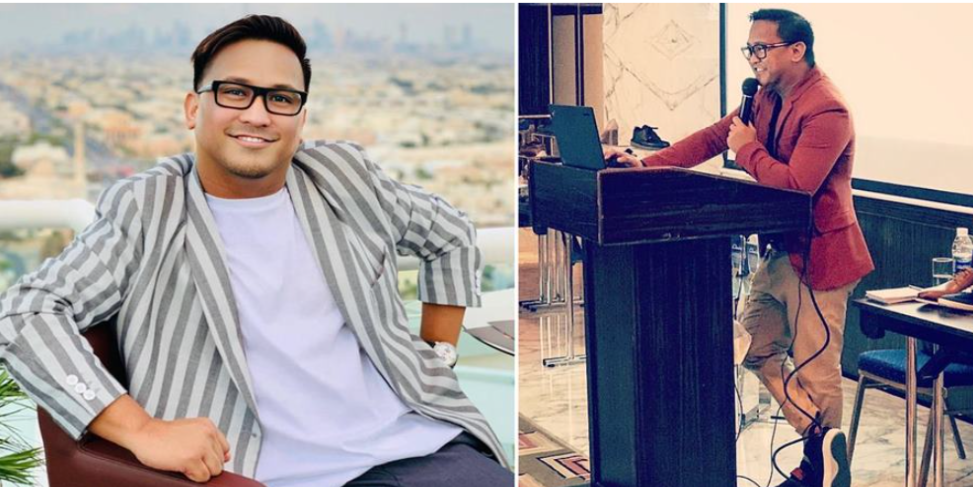
“I am deeply honoured and grateful to have been chosen as one of the stories of purpose and triumphs that will be immortalized in this book of Ulysses Espartero / Yul Viriña Espartero that pay tribute to 100 Influential Filipinos in the Gulf Region.

I came to Dubai with just one goal and that is to be successful. Fifteen years later, my view of success seems to mean a lot more simpler than I have anticipated. This truly has humbled me and has caused me to further reflect. And perhaps mostly, I hope that my story demonstrates that hard work pays off and that dedication to one’s craft and a purpose driven life can bring you to a state that you can be proud of.

I am grateful for my family who have never ceases to love and support me. I am thankful for my friends who became my family abroad, and my colleagues both past and present that had shaped me to be who I am in my career today. I am just over the moon that all my hard work is being recognized. Thank you Yul for the opportunity and the recognition! Your work is a testament of how dedicated you are in honoring the unsung heroes overseas!
Nay and Amang, your bunso is now part of a Book! This is for both of you! ”

Source: Ed Viray’s Facebook page

See more of Mr. Ed Viray’s achievements

https://dubaiofw.com/pinoy-buying-merchandising-director/
https://www.everand.com/issue/504391238/TGFM-Issue-11-March-2021

Galing ng Bulakenyo | Standard
33

Alagad ng Sining sa Larangan ng Pagpipinta

Alagad ng Sining sa Larangan ng Pagpipinta

33

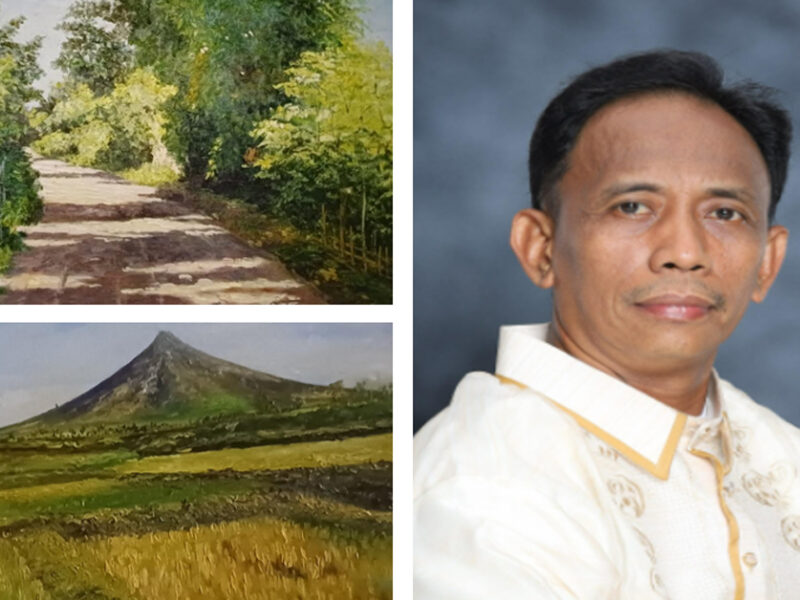
Dr. Reynaldo Salamat

Doctor of Education, Major in Industrial Education Management
Professor VI
Bulacan State University

Dr. Reynaldo Salamat is currently teaching at the College of Industrial Technology of Bulacan State University (Main Campus), Malolos City, Bulacan. He is the Founding Chairman and President of Lumina Art Group from 2015 to the present and at the same time, the Vice President of Paombong History, Arts, Culture and Tourism Council.

He hails from the town of Paombong, province of Bulacan where his town is known as the “Vinegar Capital of the Philippines” and is most popular for “Sukang Paombong”, with the vinegar extracted from the sap or juice of sasa (nipa fruit).

As a Paombongeño, Dr. Rey highlighted the trademark of his town in his artwork, the Sukang Paombong in “Tukil”.

Tukil is a bamboo tube-like container used by the farmers in fermenting the sasa juice to produce vinegar. “Tukil” by Dr. Rey, as one of his best paintings shows the ingenuity of Paombongeños.

“Tukil” of Paombong, is made from bamboo hard hollow stem. This simple traditional container is used to collect the sap of Nipa palm that may convert into vinegar which is used in sweets and desserts, but also in curries and sauces.

Tukil of Paombong Vinegar is well-known for its distinct manufacturing method and deep flavor. Originating in the Philippines, Paombong vinegar is a mainstay in Filipino cooking and is renowned for its acidic flavor. As a brand, Tukil probably denotes a high bar for authenticity and quality in the Paombong vinegar-making heritage.

In Paombong, vinegar is traditionally made by fermenting sasa (fruit of nipa), which produces an acidic vinegar with a hint of sweetness. It is a versatile component in Filipino recipes like adobo, sinigang, and kinilaw because of its unique flavor character.

In addition to its flavor, Tukil’s vinegar may be treasured for its cultural value, which connects it to the culinary legacy of the Philippines.

Other Stories | Standard
42

FAME Features: Women Of FAME

FAME Features: Women Of FAME

42

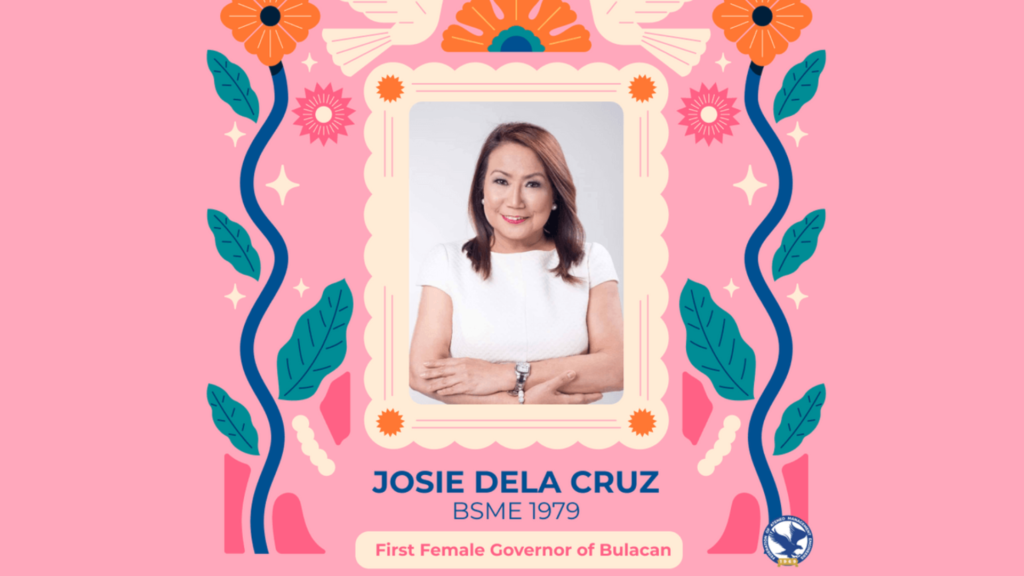
Josie Mendoza-dela Cruz (BSME 1979)

The only thing constant in life is change. But pushing for change means challenging the status quo. Because people prefer to stay within their comfort zones, this is where the biggest task lies.

I ran for governor of Bulacan during a time when only few women were in government. Men, especially the politicians, believed it was a job best fit for only them.

Winning meant immersing myself in the community, being available 7 days a week, building partnerships, and selling a dream. I started with the youth, then the women, until finally I won the respect of the men. To achieve that, it meant working twice as hard as my male counterparts.

By God’s grace, I became the first woman governor of Bulacan.

—

Josie Mendoza-dela Cruz
BSME 1979
First Female Governor of Bulacan
Served June 30, 1998- June 30, 2007

Source: Federation of Ateneo Management Engineers

Galing ng Bulakenyo | Standard
37

Mang Danny’s Organic and Natural Farm

Mang Danny’s Organic and Natural Farm

37

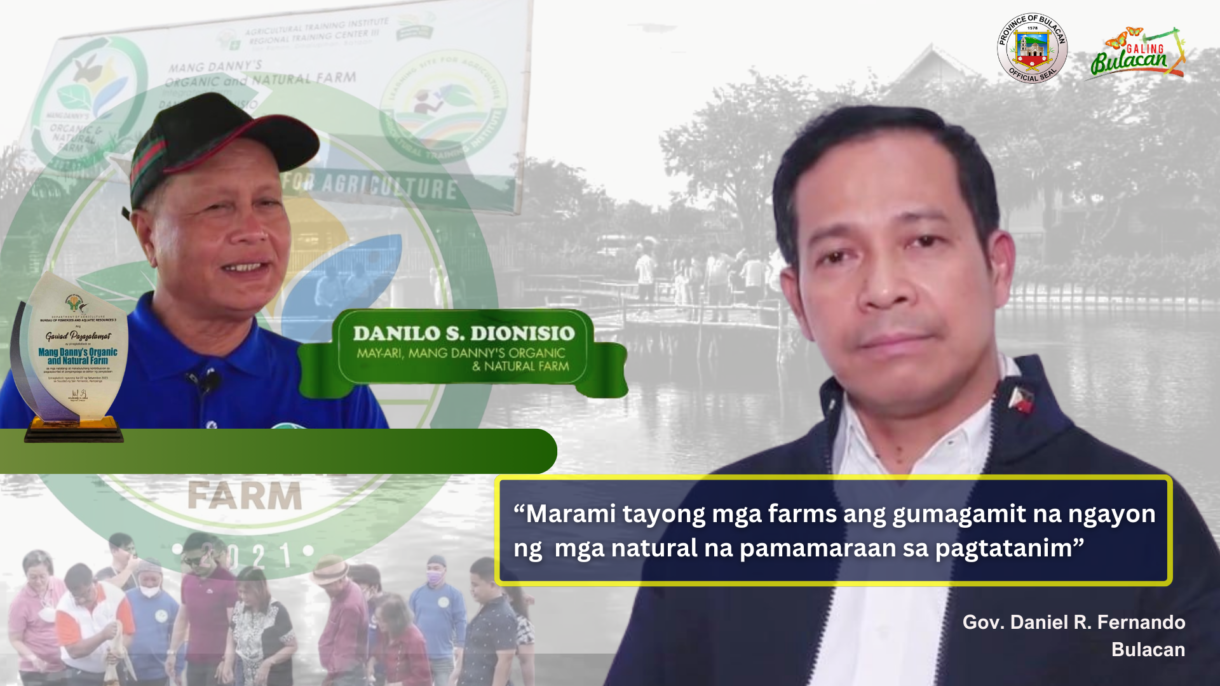
“Mga Bulakenyo, Kayo ba ay may interest sa organic farming? Dito sa ating lalawigan, Marami tayong mga farms ang gumagamit na ngayon ng mga natural na pamamaraan sa pagtatanim ng mga halaman at gulay. At pati na po rin sa pagpapalago ng mga palaisdaan at pagpapalaki ng mga livestock animals. Kaya’t sa isa sa ating pagdayo do’n po sa bayan ng Paombong ay makikilala natin si Mang Danny Dionisio. Isang dating OFW na ginamit ang kanyang kaalaman sa organic farming na syang naging daan po para maging isa sa mga accredited Learning Sites in Agriculture or LSA ng agricultural learning institute ang kanyang farm kaya’t atin pong pasyalan ang Mang Danny’s Organic and Natural Farm and experience the organic way of life.”

– Gov. Daniel R. Fernando

“Kaisa po ako sa adhikain ng ating pamahalaan para mapaunlad and sektor ng ating agrikultura at pangisdaan, magkaroon ng sapat, mura at ligtas na pagkain sa hapag-kainan ng bawat Pilipino.”

– Mang Danny

Other Stories | Standard
45

Young Legislators’ Group NMYL Celebrates 30th Anniversary

Young Legislators’ Group NMYL Celebrates 30th Anniversary

45

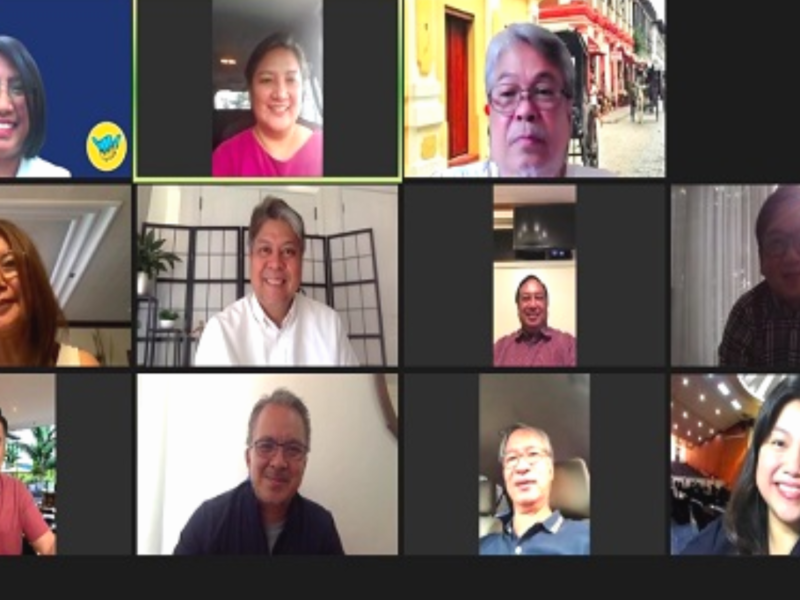
NMYL Presidents’ reunion picture: “Young legislators’ group NMYL celebrates 30th anniversary”, the Zoom-captured picture shows from left: Love Baronda, Cecilia Clare Reyes, DV Savellano, Josie dela Cruz, Kiko Pangilinan, Ed Chatto, Herbert Bautista, Enrique dela Cruz, Julian Coseteng, Del de Guzman, and Dorothy Delarmente.

LOVE BARONDA, current president of the National Movement of Young Legislators (NMYL), was only a toddler when the group was formally formed thirty years ago.

“Who would have thought na two years old pa lang ako, nag-birthing pains pala kayo conceiving this organization. And because of all your hard work, we are the beneficiaries of your thirty years of labor. So, thank you, thank you po sa mga founders natin especially kay Senator Kiko,” she said.

Councilor Baronda of Iloilo City, NMYL president from 2020 to present, made this remark at the online reunion of all the 12 NMYL presidents earlier this week, as kick-off to the group’s year-long 30th anniversary celebration.

At the reunion, all NMYL presidents from the founding president Senator Francis “Kiko” Pangilinan, NMYL president from 1988 to 1992, all the way to current president Councilor Baronda took turns reminiscing: spending their own money, not being able to work on official business, and having to squat in the office of what is now TESDA.

The young once recalled with fondness how the organization grew from a group of 250 idealistic young legislators to a 2,000-strong organization.

Former Marikina Mayor Del De Guzman, NMYL president from 1998 to 2001, and former Alicia town (in Isabela) Mayor Cecilia Claire “Jeng” Reyes, NMYL president from 2008 to 2011, both said all the hard work of organizing bore fruit.

In De Guzman’s words: “Masaya rin ako na I was part of the first group or core group na nag-start mag-organize. ‘Yun nga lang, ‘yung mga experience natin bago natin na-organize ‘yung first congress, we really had to spend our own money, our own time kasi hindi tayo binibigyan ng official time noon, official business. So kapag wala tayo sa station, absent tayo, wala tayong allowance, wala tayong kahit ano. So ‘yun ‘yung mga sacrifices na ginawa natin just for this advocacy. Alam naman natin ‘yung advocacy natin: anti 3Gs, guns goons, and gold.”

For Reyes, institutionalizing NMYL was a major accomplishment. “Nagpapasalamat po ako kay Senator Kiko kasi nagkaroon po ng permanent office space ang NMYL sa Regalia Towers. ‘Yun po malaking pakinabang po sa NMYL, na-institutionalize ang NMYL,” she said.

CAMARADERIE IN SERVICE

Inspired by the overwhelming success of young blood in the first post-martial law democratic elections in 1988, young councilors from Metro Manila headed by then-councilor Pangilinan organized themselves into the Metro Manila Young Councilors’ League.

But as more young politicians from various parts of the country wanted to be part of the organization, the group eventually came to be known as National Movement of Young Legislators. Amidst all kinds of challenges and after consultations in Luzon, Visayas, and Mindanao, the NMYL Founding Congress was held on April 14-17, 1991 at University of the Philippines-Diliman.

Former Quezon City Mayor Herbert Bautista, NMYL president from 2001 to 2004, said NMYL opened the national political stage to him, learning from fellow young leaders.

“Ito ‘yung naging opening ko to a national organization as an elected leader, and then nagsunod-sunod na ‘yun, Vice Mayors League, Mayors League…Thank you so much for giving this opportunity to be part of the leadership and the organization that is NMYL. I learned so much from this. I got to meet people who are ideal and until now very ideal,” Bautista said.

Former Quezon City Councilor Julian Coseteng, NMYL president from 2004 to 2008, remembered having fun while learning: “I cannot speak of my experience as a politician without speaking of NYML. NMYL has made my career in politics a lot more fun, a lot more enjoyable, very, very packed with very, very memorable experiences. I will always remember the fellowship, all the learnings that I had which helped me improve as well as a politician.”

Bohol Congressman Edgardo Chatto, NMYL president from 1995 to 1998, said the movement is a major part of his political and personal growth. “NMYL is really part of [my] growth process, development. And I am so happy that the young generation now are involved. So tuloy-tuloy talaga tayong mag-i-influence doon sa participation ng ating young legislators,” he said.

Former Quezon City Councilor Dorothy “Doray” Delarmente, NMYL president from 2011 to 2013, shared: “All my closest and dearest friends right now, in and out of politics, ay na-meet ko sa NMYL…I said one of the best reasons of becoming a public servant is because of my experiences and the friendship that I built from NMYL.”

Baliuag Councilor Enrique “Buko” dela Cruz, interim NMYL president from 2018 to 2020, acknowledged the positive impact of the organization. “Napakalaking tulong po sa mga kabataan, sa mga batang mambabatas ang samahan na ito. I just hope that I can make myself worthy of being a part of this noble organization,” he said.

Expressions of thanks marked the virtual reunion meeting. Pangilinan said that even after his NMYL term, he continued to support “our baby” as a sort of homage to the youthful idealism that inspired NMYL’s founding.

“Kahit na wala na ako sa NMYL, [my Senate] office has been there for NMYL. In fact, many of the programs we put together, wala na ako sa NMYL. Pero ‘yung mga exchange programs, with China, the United States, and Australia, tuloy-tuloy nating sinusuportahan ‘yun. ‘Yung AIM (Asian Institute of Management) Programme for over a hundred sixty young political leaders… Syempre, bilang ama, mahal natin ang ating mga anak eh syempre parang NMYL is our baby. Tayong lahat, hindi lang ako. Tayong lahat na andoon ‘nung unang term,” Pangilinan said.

NMYL Alumni president Congressman DV Savellano of Ilocos Sur initiated the NMYL presidents’ reunion meeting, which lasted almost two hours.

Brimming with three decades worth of memories, the NMYL presidents all agreed to work together to celebrate the movement’s thirty years of idealistic, imaginative, and impassioned service to the country.

“Really, it’s beautiful to be able to retrace and remember and recall all those that we shared. And I continue to share the same love for the country, the same desire to really see the kind of political reforms that we have been fighting for,” said former Bulacan Governor Josie dela Cruz, NYML president from 1992 to 1995.

Posts pagination

  • 1
  • 2
  • 3
  • 4
  • 5

© 2025. Josie M. Dela Cruz. All rights reserved.