Dino Balabo
May 3, 2009 | 12:00am
BALIUAG, Bulacan, Philippines – This bustling town in northeastern Bulacan last week marked the centennial of buntal hat weaving with a 10-day festival.
The “Buntal Festival” celebration is highlighted by a job fair, painting contest, concerts, buntal hat Santacruzan, street dancing, search for Lakambini ng Baliuag, and exhibits of products made from woven buntal fibers.
According to the book “Baliwag Then and Now” by Rolando Villacorte, buntal hat weaving started in this town sometime between 1907 and 1909 when Mariano Deveza brought to Baliuag bundles of coarse buntal fiber from his home town of Lucban, Quezon.
Back then, Lucban was the sole seat of the buntal weaving industry and could not cope with the large demand for the product. Baliuag was already famous for bamboo hat weaving.
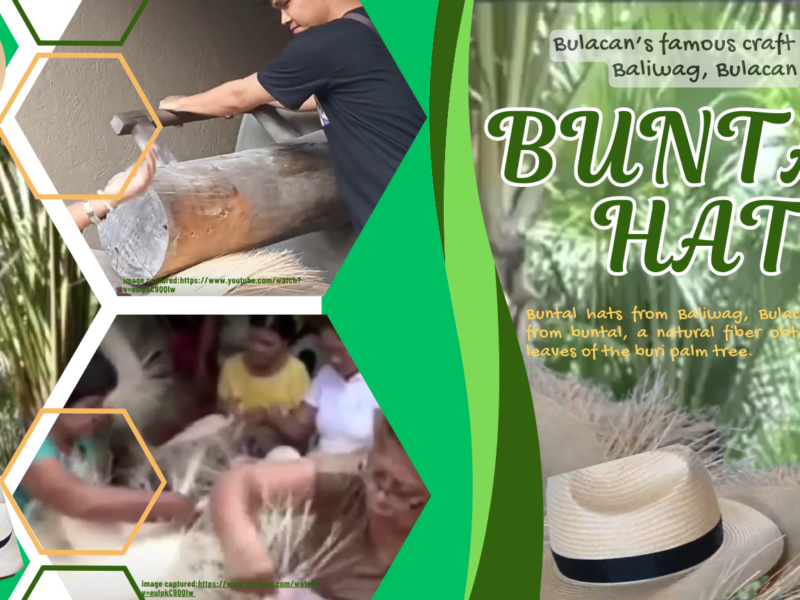
Rosie Decasa, the tourism officer of this town and owner of Baliuag Buntal Enterprises, said Deveza first brought the buntal fibers to the late Dolores Maniquis who became fascinated and experimented with it, softening the fibers using a heavy wooden roller.
Maniquis started weaving the pliant fibers into hats, and later experimented with colors by first bleaching and then dyeing the fibers.
Decasa said that buntal hat weaving became a booming industry in this town by 1910, with at least one weaver in every household.
As the industry grew, specialization set in and improved production methods became standard practice.
Decasa explained that to finish a hat, four persons were needed.
The first weaver would take care of the hat’s crown or head, and the second weaver would make the brim.
The third weaver would finish or close the brim, while the fourth would bleach the yellowish fiber to make it more attractive.
By 1920, Baliuag buntal hat production became a major dollar-earning export, as it was sold in the world market and became known as the “Panama hat.”
However, by the late 1920s, the industry suffered from cutthroat competition from China, as the Chinese started producing their version of “balibuntals” with raw materials imported from the Philippines.
Decasa said that in 1923, Chinese businessmen in Hong Kong hired Filipino weavers, and before the war, the industry was in virtual collapse.
However, after the war, the industry began to thrive anew under the Balibuntal Straw Hat outfit of the late Joaquin Villones, which had about 5,000 weavers and suppliers.
Records show that the Villones outfit manufactured about a quarter of the 40,000 total monthly production by the 1960s.
Today, buntal hat weaving continues to thrive here, but manufacturers like Decasa are facing a serious lack of skilled manpower.
“We still have hundreds of weavers, but they mostly do it on part-time basis,” Decasa said, adding that she was willing to transfer the skill and technology to young workers through workshops and seminars.
She said she is also willing help train detainees in different jails to learn how to weave, in order to help the industry survive.
Feliza Ramos, 92, told The STAR that the economic crisis has reduced the possibility of increased production of buntal hats.
As one of the oldest living buntal weavers, Ramos wove her last buntal hat two years ago.
For her part, Pilar Bernardo, 98, said that not too many young people today are interested in buntal hat weaving.
“Noong panahon namin, lahat kami ay gumagawa niyan, pero ngayon iba na interes ng mga kabataan (In our time, we were all weaving, but now the young people have different interests),” she said.
Source: PhilStar Global